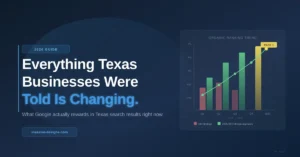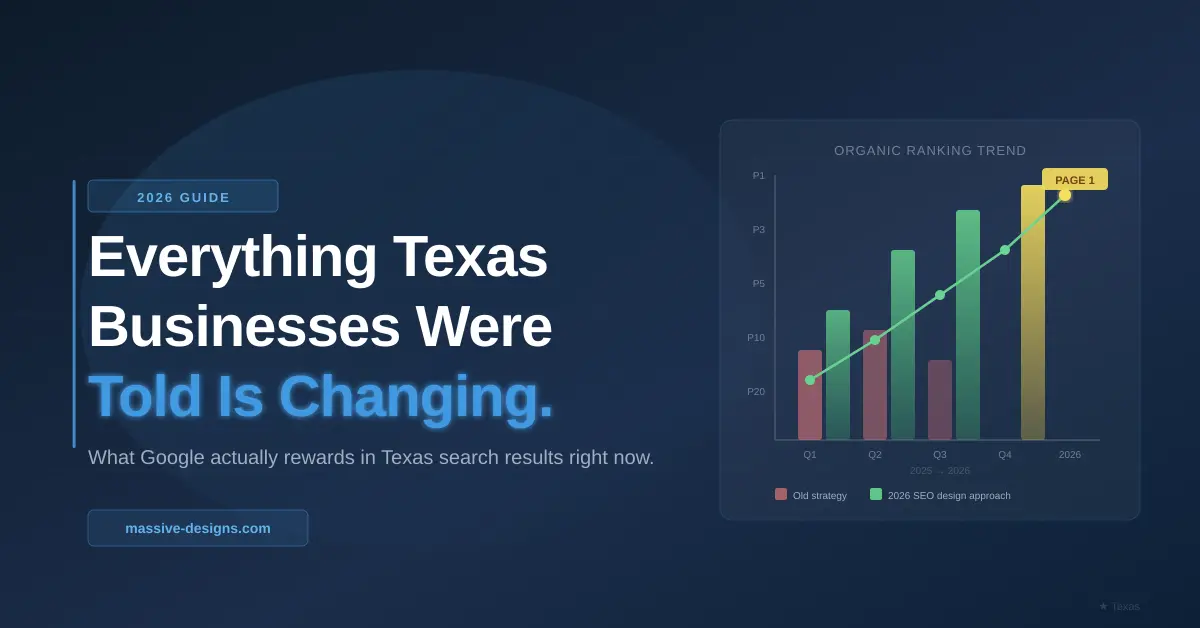
Something shifted in Texas search results around mid-2025, and a lot of business owners still haven’t noticed. Sites that held page one positions for years started slipping. Not because they did anything wrong, but because Google stopped rewarding what it used to reward.
If you run a business in Dallas, Austin, Houston, or any of the smaller Texas markets in between, you may have watched your traffic go flat without a clear reason. Your website didn’t change. Your services didn’t change. But your rankings did.
That’s the 2026 problem in plain terms: the SEO design rules that worked two years ago are producing different results now, and most of the advice still circulating online is playing catch-up.
This isn’t a guide about quick fixes. It’s about understanding what actually changed, and what that means for how Texas businesses need to think about their websites going forward.
Google in 2026 Is Not the Search Engine You Learned About
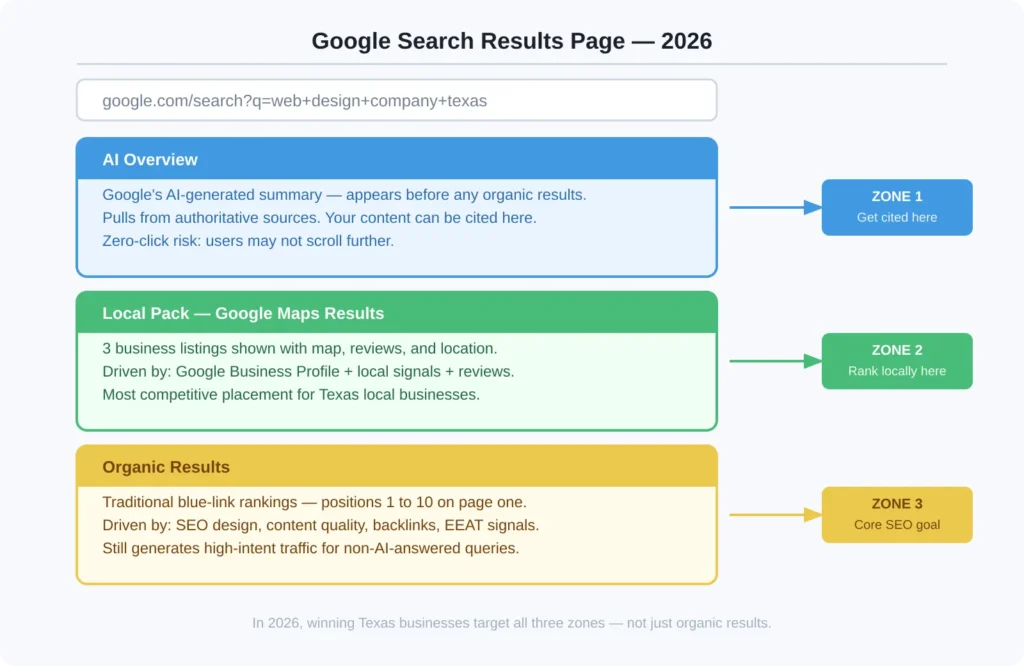
The introduction of AI Overviews changed what ranking on Google actually means. Before mid-2024, reaching position one on a results page meant you were the first thing a user clicked. That’s no longer true for a growing share of searches.
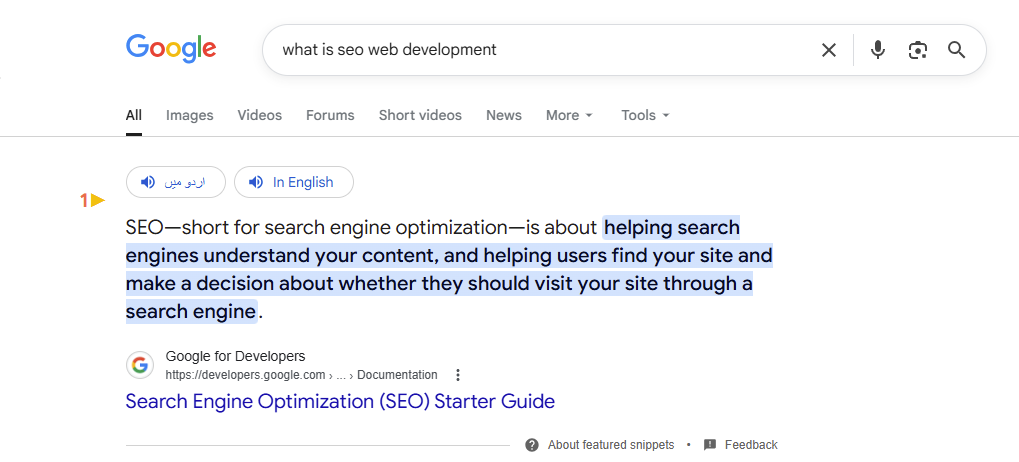
When someone types a question into Google now, they often get a machine-generated summary at the top of the page, pulled from across multiple sources, before they see a single organic result. For some queries, users get a complete answer without clicking anything at all. Google calls this a feature. For businesses relying on organic traffic, it’s a structural shift that requires a different response.
The Texas businesses adapting well to this aren’t trying to outrank the AI Overview. They’re figuring out how to get cited inside it. That means producing content specific enough, authoritative enough, and structured enough that Google’s AI pulls from it when assembling those summaries. That’s a completely different content goal than what most SEO advice from 2023 was pointing people toward.
What SEO Design Actually Means When AI Is Reading Your Site
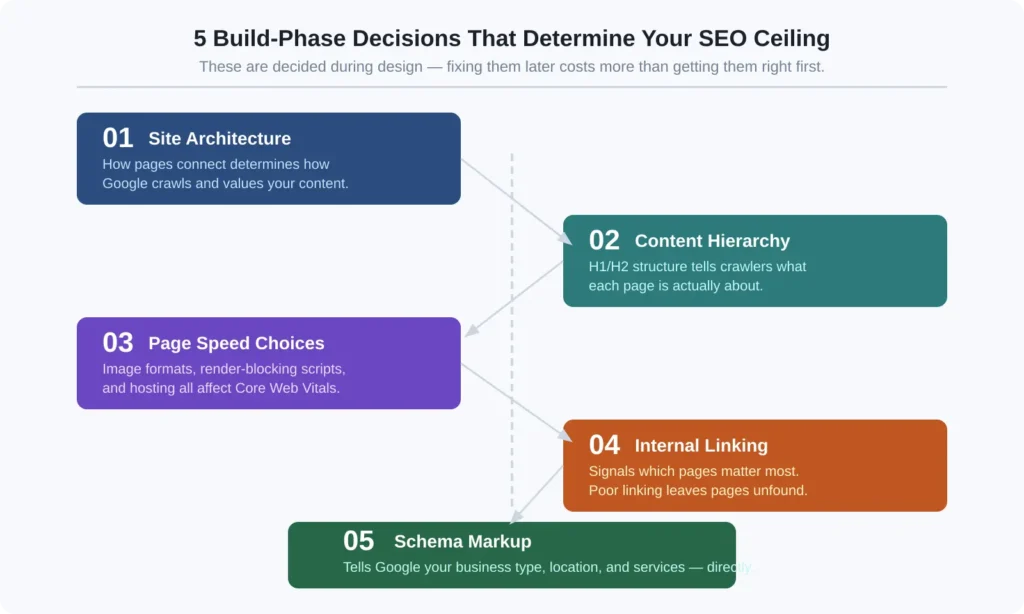
For a long time, SEO design was explained as a checklist. Keyword in the title. Heading tags in order. Meta description under 160 characters. That checklist still matters, but it’s no longer the whole job.
Google’s ability to understand the meaning of a page, not just its keywords, has changed what strong on-page SEO looks like. A page about web design services in Texas that mentions a target phrase seven times but doesn’t answer any real buyer questions will underperform a page that mentions it twice but explains the process clearly, references actual project challenges, and gives a reader something they couldn’t get from ten other tabs.
The technical side gets specific quickly. Pages need schema markup that tells crawlers exactly what type of business and content they’re looking at. Internal linking needs to guide users and bots through a logical structure, not just connect pages at random. Site speed isn’t a bonus; a page loading in over three seconds on a phone loses real visitors in measurable numbers.
What makes this complicated is that most of these decisions happen during the build phase of a website, not after. Once a site is built on a framework that renders poorly on mobile, or structures URLs in a way that confuses crawlers, fixing it costs more than getting it right from the start. This is why the phrase ‘SEO-first design’ carries actual meaning in 2026, it describes a process, not a marketing claim.
The Texas Search Landscape in 2026
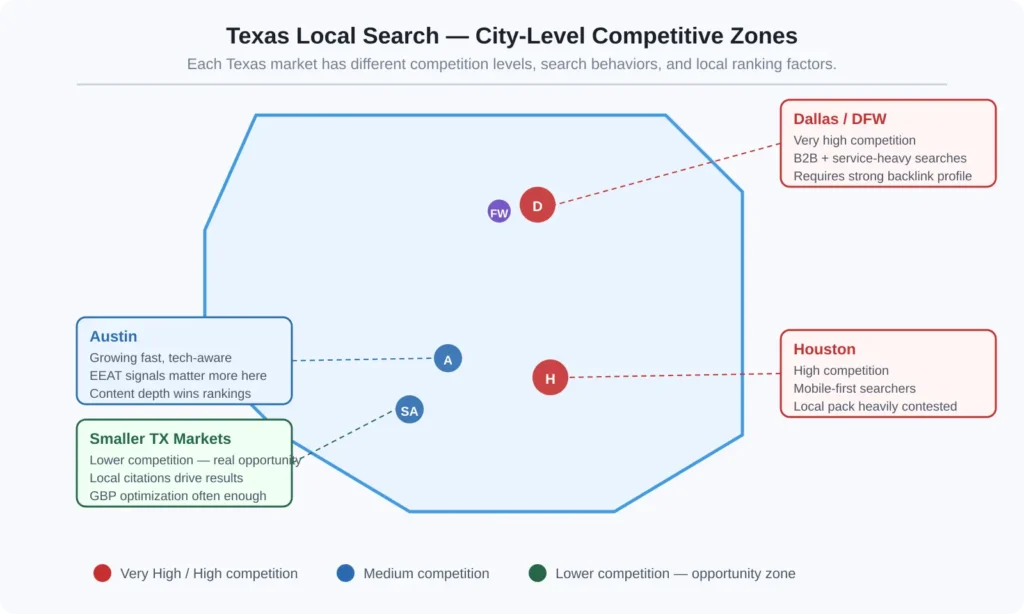
Texas isn’t a single market. Anyone treating it as one is missing a lot of the picture.
The competition in Austin search results looks nothing like what you’d find in Lubbock or Beaumont. A small web design company serving the Richland Hills area is playing a different game than an agency trying to rank statewide. Understanding that distinction, and building content and site structure around it, is what separates businesses that generate consistent local leads from those that don’t.
Mobile usage in Texas is above the national average, particularly in high-growth suburban corridors. A site that loads cleanly on a desktop but lags on a phone isn’t a site with a minor performance issue. In fact, it’s a site actively losing customers before they read a single word.
Searchers are also more specific than they used to be. Someone in Houston looking for a web design company is increasingly likely to search for something like ‘web design company for service businesses in Houston’ rather than a broad phrase. The searches that convert, the ones that end with a phone call, tend to be longer, more qualified queries than they were three years ago.
Local pack visibility has gotten harder to hold. The Google Maps listings appearing above organic results for local searches are more competitive than they were in 2024. The signals influencing them go beyond the website: consistency of business information across directories, review recency, and proximity to the searcher all factor in. A website redesign alone won’t fix a weak local pack presence.
What Google’s Quality Framework Actually Means for a Texas Website
Google’s search quality guidelines use a framework called E-E-A-T: Experience, Expertise, Authoritativeness, and Trust. The practical translation is direct. Does this website feel like it comes from people who genuinely know what they’re doing?
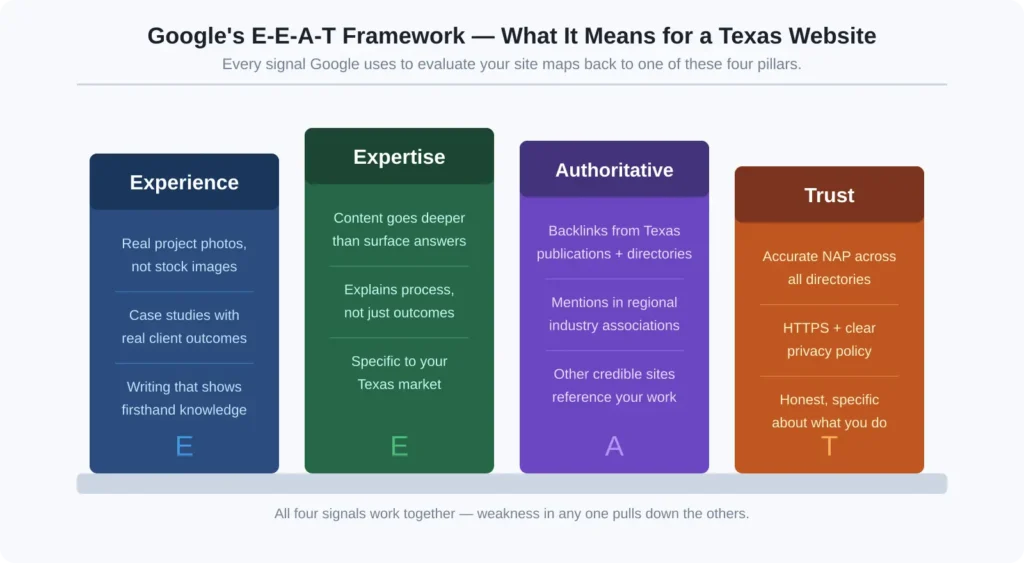
Experience means showing real work. Not stock imagery and generic copy, but actual projects, real client contexts, and writing that reflects someone who has encountered the specific problems your customers bring.
Expertise means the content goes deeper than surface level. A service page that only explains what website design is, rather than how decisions get made, what problems typically come up, what the process actually looks like, doesn’t signal expertise. It signals the minimum required to have a page on that topic.
Authoritativeness builds over time through backlinks, mentions in local publications, and the credibility of sources that reference you. A Texas business with coverage from regional media and links from industry associations carries more weight than one with none of those, regardless of how polished the homepage looks.
Trust comes from specifics: real addresses, accurate business information across the web, verifiable credentials, and pages that are honest about what the business does and who it serves. Vague positioning and inflated claims work against this, often in ways that are hard to trace back to any single piece of content.
Most Texas websites underinvest in experience and trust signals, treating them as secondary to keyword placement. In 2026, that’s a ranking liability, not an abstract concern, but something showing up in actual traffic data for businesses competing in web design services and digital marketing categories across the state.
The Honest Timeline — What to Expect and When
Nobody in this space talks about this enough, so it’s worth being direct.
SEO results take time. Not weeks. Months. For a new website entering a competitive Texas market, twelve months of consistent effort is a more realistic frame than ninety days. For an established site undergoing an SEO-driven redesign, meaningful traffic movement typically starts showing up between four and six months’ post-launch, assuming the technical foundation is clean.
For a broader view, you can read this article too: AI-Driven SEO Strategies for 2026
That timeline is uncomfortable because it requires spending money and waiting before the return becomes obvious. But the compounding nature of organic search is what makes it worth the patience: a page that earns a strong position this spring will generally still produce leads next spring, without additional spend. Paid advertising doesn’t work that way. When the budget stops, the traffic stops with it.
Texas businesses that committed to building their organic presence in early 2026 will be in measurably stronger positions by 2027 than those who waited. That’s not a prediction. It’s just how compounding works in search.
A Self-Audit Any Business Owner Can Run This Week
Before hiring anyone or rebuilding anything, check these six things on your current site. None of them require a paid tool or a consultant.
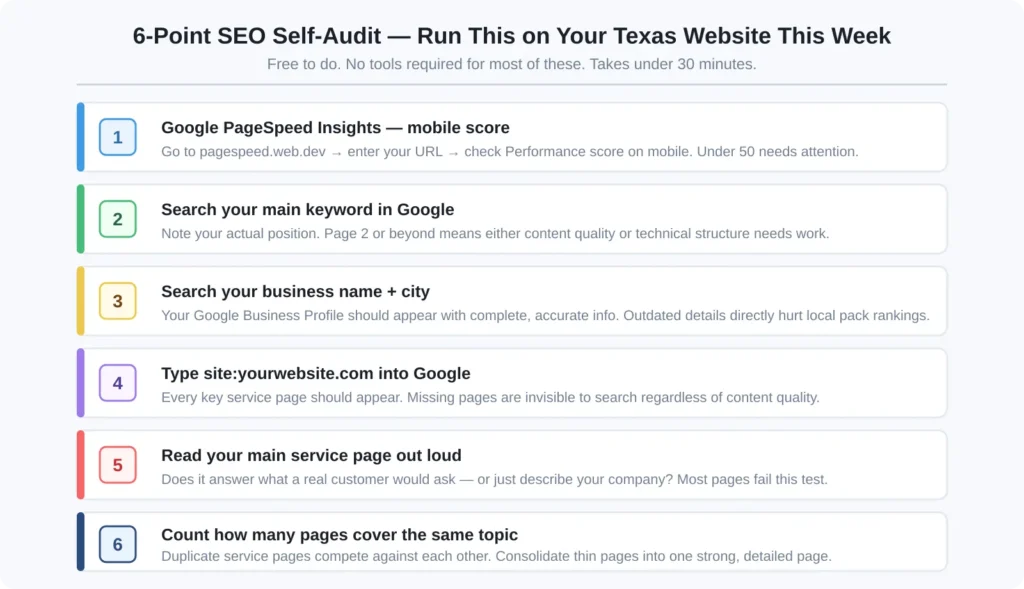
- Run your site through Google PageSpeed Insights (free). Check your Core Web Vitals score on mobile specifically. Anything below 50 on performance is worth addressing before investing in content or links.
- Search your most important keyword in Google. Note your actual position. If you’re beyond page two, the issue is either content quality, technical structure, or both.
- Search your business name and city together. Your Google Business Profile should appear with accurate, complete information. If it doesn’t, or if the details are outdated, that’s affecting your local pack visibility directly.
- Type site:yourwebsite.com into Google. Every major service page should appear in the results. If key pages are missing from the index, they’re invisible to search, regardless of how good the content is.
- Read your main service page out loud. Ask whether it answers the questions a real customer would actually bring, or whether it describes your company without addressing their problem. Most pages fail this test.
- Count how many pages cover the same topic. Near-duplicate service pages compete against each other in search and dilute whatever authority the domain has built. Consolidating them into stronger single pages typically produces better results than having five thin ones.
The rules aren’t changing because Google is arbitrary. They’re changing because the way people search is changing, and Google is updating its systems to match.
Texas businesses that understand this, that ranking in 2026 is about being genuinely useful to a more skeptical, more specific searcher, inside a results page that looks different than it did two years ago, are building the kind of web presence that compounds over time.
The ones still optimizing for 2023 are working harder for less.