Key Takeaways
- Social media without a system behind it rarely moves business numbers.
- Texas brands that treat it as a posting schedule, not a channel strategy, often spend money with nothing to show for it.
- Building it into your brand plan means connecting your message, channel behavior, and measurement to real outcomes.
- The 2026 trends that matter most are about trust and attention, not virality.
- You do not need a huge budget to run this well, but you do need a clear 30-day starting point.
Texas Reality Check: What Happens When Social Is an Afterthought
A plumbing company in the San Antonio area spent eighteen months posting job photos on Instagram. The owner ran a few boosted posts, picked up some likes, and figured social was working because the phone rang some days after he posted. When a competitor started running short video content explaining common pipe problems in plain English, calls that had been coming to him started going elsewhere instead.
He was not doing anything wrong. He was just posting. His competitor had a system.
That gap between posting and strategy is where Texas brands lose the most ground, and it happens more often than most marketing conversations admit. The decision to work with a social media marketing agency is not about outsourcing your Instagram account. It is about deciding whether social is a real channel in your business or a chore someone manages between other tasks.

The gap between “just posting” and a channel strategy is where most Texas brands lose ground to competitors who show up with a plan.
Social Media Is Not ‘Posting’ — It Is a System
Most marketing plans treat social as a content calendar. Pick three days to post, find some photos, write a caption, done. That approach will keep your page active. It rarely builds anything.
A channel system works differently:
- It connects your content decisions to audience behavior.
- Asks what your followers do after they see a post, not just whether they liked it.
- It sets expectations around what each platform is supposed to do for your business, because Instagram, Facebook, LinkedIn, and TikTok do not all serve the same function, even if you are posting similar content across all of them.
For Texas brands, this often means making a decision that feels uncomfortable. Some platforms probably do not belong in your plan at all. A B2B software company in Austin likely gets more return from LinkedIn and targeted Meta ads than from chasing TikTok trends. A restaurant in Houston may find that Instagram reels and a solid Instagram marketing strategy do more for foot traffic than a Facebook page that has not been active in eight months.
Figuring out where to actually show up, and what to say when you do, is strategy. The posting part is just execution.
The Brand Plan Map: Message, Channel Behavior, Measurement
Think of a working social media strategy as three connected layers, not three separate tasks. Our content strategy process at Massive Designs starts with mapping all three before a single post goes live.
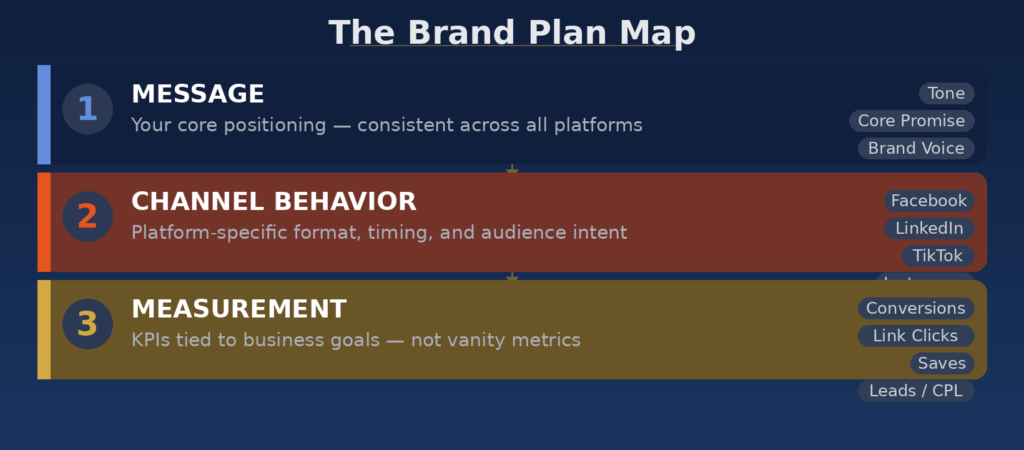
The Brand Plan Map: three layers that connect what you say, where you say it, and how you know it is working.
| Layer 1: Message | Layer 2: Channel Behaviour | Layer 3: Measurement |
| Your core positioning. What does your brand say consistently, regardless of where it shows up? For a Texas home services company, this might be “straight pricing, no surprises.” The message does not change by platform. The way you say it does. | Each platform has its own rhythm. Instagram rewards visual consistency and short-form video. LinkedIn responds to professional framing. Facebook still drives local event traffic. Your channel behavior plan decides what each platform is responsible for. | Pick the numbers that connect to your business goals. If you want leads, track link clicks, form fills, and cost per lead. Follower count is a vanity metric unless you can show a relationship between follower growth and any outcome you actually care about. |
2026 Social Media Trends That Move the Needle for Texas Brands
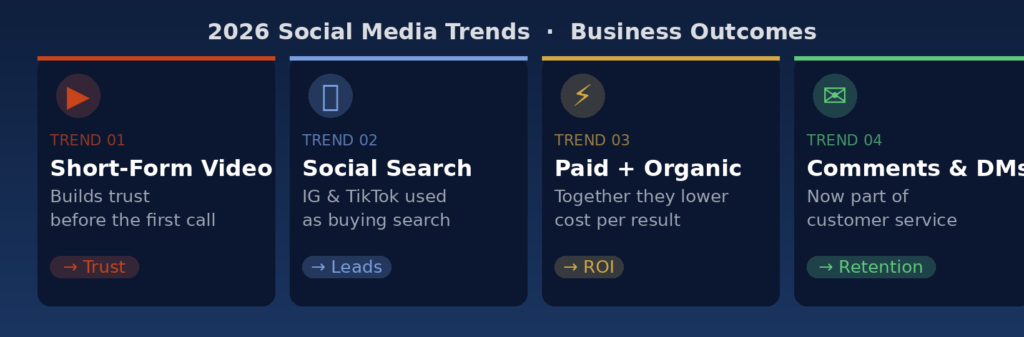
Four 2026 trends tied to real business outcomes, not just platform metrics.
| TREND 01 Short-Form Video Is Still Earning Trust, Not Just Attention Brands using Reels or TikTok-style videos to explain something useful, answer a common question, or show a behind-the-scenes process are getting saves and shares that pure product content does not. For service businesses, this format builds credibility before the first phone call. → Business outcome: Trust | TREND 02 Search Behavior on Social Is Changing Buying Decisions Instagram and TikTok are now being used as search tools, particularly by buyers under 40. People search “best HVAC company San Antonio” directly in these apps. If your content does not naturally include location and service language, it will not come up. → Business outcome: Leads |
| TREND 03 Paid and Organic Need to Work Together Running ads without organic content behind them means people who click your ad land on a profile that looks inactive. Accounts with regular organic activity consistently get better paid performance at a lower cost per result. (Sprout Social, 2025; Meta Business Insights, 2025). → Business outcome: ROI | TREND 04 Comment Sections and DMs Are Now Part of Customer Service Brands that respond in comments and handle questions in DMs are rated higher for trust in post-purchase surveys. Someone asking about pricing in your Instagram comments is a potential customer. How you respond there matters as much as your ad copy. → Business outcome: Retention |
A 30-Day Social Media Plan Texas Teams Can Actually Run
You do not need to have everything figured out before you start. You need a clear first month. This four-week framework is the same one our SMM services for Texas brands use when onboarding a new client from scratch.
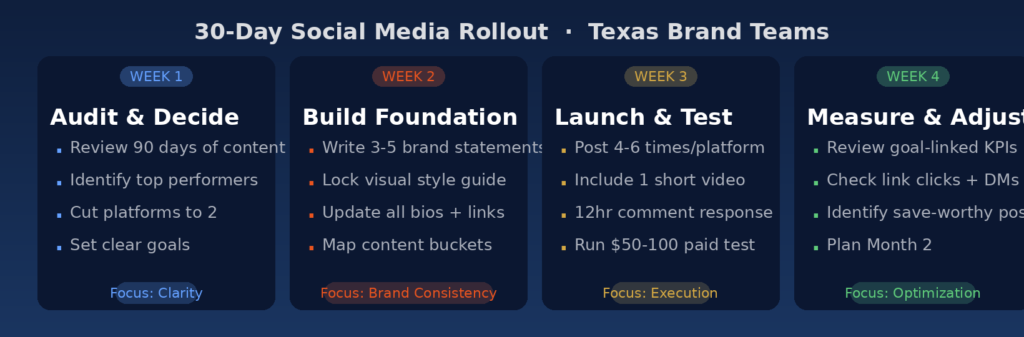
30-day social media rollout calendar — four focused weeks with clear deliverables at each stage.
| WEEK 1 Audit & Decide ‣ Review 90 days of content ‣ Identify top performers ‣ Cut platforms to 2 ‣ Set clear goals | WEEK 2 Build Foundation ‣ Write 3–5 brand statements ‣ Lock visual style guide ‣ Update all bios + links ‣ Map content buckets | WEEK 3 Launch & Test ‣ Post 4–6 times/platform ‣ Include 1 short video ‣ 12hr comment response ‣ Run a $50–$100 paid test | WEEK 4 Measure & Adjust ‣ Review goal-linked KPIs ‣ Check link clicks + DMs ‣ Identify save-worthy posts ‣ Plan Month 2 |
Budget, KPIs, and What to Ignore
For a small to mid-size Texas business, a realistic monthly investment is $500–$1,500 in paid content, plus the time cost of whoever manages it. Working with a social media marketing agency typically starts in the range of $1,000–$3,000 per month for a managed service that includes strategy, content, and reporting.

The six KPIs that connect to business performance, plus three vanity metrics most brands waste time tracking.
Track these — tied to goals:
- Lead generation: link clicks, DM inquiries, form submissions, cost per lead
- Brand awareness: reach, saves, share rate
- Retention: comment engagement rate, repeat profile visitors, email list growth from social
Ignore these:
- Follower count — unless you are actively growing a paid community
- Post likes without any secondary action (click, save, share, DM)
- Raw impressions on posts that never lead to a click or save
Instagram marketing strategy benchmarks vary by industry, but a reasonable target for small business accounts is an engagement rate between 1 and 3 percent on organic posts. If you are consistently below that, the content format or message probably needs work before you increase ad spend.
Mini Case Notes from the Field

Changing the caption hook from a generic product announcement to a Texas-specific problem the audience recognised immediately.
| Case Note 01 · Retail · DFW |
| A Texas Retail Brand That Stopped Guessing |
| A women’s clothing boutique with two locations in the DFW area was posting consistently on Instagram but saw flat traffic month over month. After a content strategy audit, the team found that product flat-lay photos had almost no save or click rate, while styling video posts had save rates above five percent. They shifted sixty percent of content to short Reels showing outfit combinations for Texas weather transitions — which is genuinely unpredictable, added clear calls to action linking to their online store, and ran a small monthly budget promoting their two top-performing organic posts. Within sixty days, online orders from Instagram traffic doubled compared to the previous period. |
| Case Note 02 · Home Services · Houston |
| A Home Services Brand That Fixed Its Profile First |
| A family-owned HVAC company in Houston was running Facebook ads but seeing a low conversion rate on their page. When someone clicked the ad and landed on their Facebook page, the last organic post was four months old and the reviews section had unanswered negative comments from two years prior. Before touching the ad budget, the team cleaned up the profile, posted two short videos explaining how to read a thermostat and when to replace an air filter, and responded to every review. Click-to-call rate on their ads improved within thirty days without changing the ad creative at all. |
FAQs
Ans. Most managed social media services for small to mid-size businesses in Texas run between $1,000 and $3,000 per month. That typically includes strategy, content creation, and monthly reporting. Some agencies offer lighter packages starting around $500 if you handle content creation yourself and need strategy and oversight only.
Ans. It depends on your audience and business model. Instagram and Facebook still drive the most volume for local service businesses, retail, and restaurants. LinkedIn is better for B2B companies or professional service providers. TikTok continues to grow for brands targeting audiences under forty. You are better off doing two platforms well than five platforms poorly.
Ans. An Instagram marketing strategy focuses specifically on that platform’s content formats, audience behavior, and ad tools. A general social media plan covers multiple platforms and includes decisions about where to show up, what to say, and how to measure results across all of them. Most brands need both.
Ans. Paid campaigns can show measurable results within two to four weeks if the targeting and creative are solid. Organic growth takes longer, often three to six months, before you see consistent engagement trends you can plan around. Most brands benefit from running both together.
Ans. No. Spreading budget and attention across every platform is one of the most common mistakes Texas brands make. Pick the two or three where your specific audience actually spends time, and do those well.
| Next Step: Find Out Where Your Social Is Falling Short. If your social media is active but you are not sure whether it is actually doing anything for your business, that is a good time to get a second opinion. A quick audit can show you where the gaps are before you spend more time or money in the wrong direction. Book Your Social Media Audit → The team at Massive Designs also works with Texas businesses on brand consistency across digital channels, worth a look if you are early in building out your plan. |