
If you run a service business in Fort Worth, you already know that competition in the DFW Metroplex is relentless. Roofers, plumbers, HVAC companies, law firms, dental offices, landscapers, every category is packed with competitors who all want the same top-three spots in Google Maps. Most business owners fix their Google Business Profile, collect a few reviews, and wonder why they’re still sitting on page two.
Here’s the truth: your Google Business Profile is just the starting point for local SEO in Fort Worth, Texas, not the finish line. The businesses that consistently rank in the local pack and organic results are doing far more behind the scenes. This guide breaks down exactly what those advanced strategies look like and how Fort Worth service businesses can implement them to compete and win in one of Texas’s fastest-growing markets.
What Is Local SEO and Why Does It Matter for Fort Worth Businesses?
Local SEO (Search Engine Optimization) is the process of optimizing your online presence so your business appears prominently when people in your service area search for what you offer. For a Fort Worth HVAC company, that means showing up when someone types “AC repair near me” or “emergency heating service Fort Worth” into Google.
According to Google Search Central, local search results are heavily influenced by relevance, distance, and prominence — three factors that go well beyond anything you can control inside your GBP alone.
Fort Worth is home to over 950,000 residents and growing rapidly, with major economic drivers including American Airlines, BNSF Railway, and a booming healthcare sector. The sheer size of the market means that neighborhood-level targeting, vertical-specific content, and technical authority-building all play a role in separating the top local rankings from the rest.
If your business only invests in GBP management, you’re competing with one arm tied behind your back. The SEO services we provide at Massive Designs are built around a complete local SEO framework, one that treats the GBP as the anchor, not the entire strategy.
Why Fort Worth Local Search Behavior Is Different from Dallas
Many agencies treat the DFW Metroplex as a single market. That’s a mistake. Fort Worth and Dallas have distinct local search behaviors shaped by geography, demographics, and business culture.
Fort Worth skews toward neighborhoods like Southlake, Keller, Benbrook, and North Richland Hills, communities with homeowners actively searching for trades, home services, and professional services. According to U.S. Census Bureau data, Tarrant County has seen sustained population growth, which means fresh demand from new residents unfamiliar with local service providers. That’s a pipeline opportunity for businesses that rank well.
Searches in Fort Worth often include neighborhood modifiers: “plumber Keller TX,” “dentist near TCU,” or “roofing company Aledo.” This hyper-local search behavior rewards businesses that build neighborhood-level content and citation depth across the entire Fort Worth service area, not just the city center.
Dallas, by contrast, has a denser commercial market where B2B searches and corporate-level services dominate. Fort Worth’s search landscape is more heavily weighted toward consumer services and home-based decisions, which makes review signals, local content, and citation consistency especially powerful ranking levers.
The Google Business Profile: What Most Fort Worth Businesses Are Getting Wrong
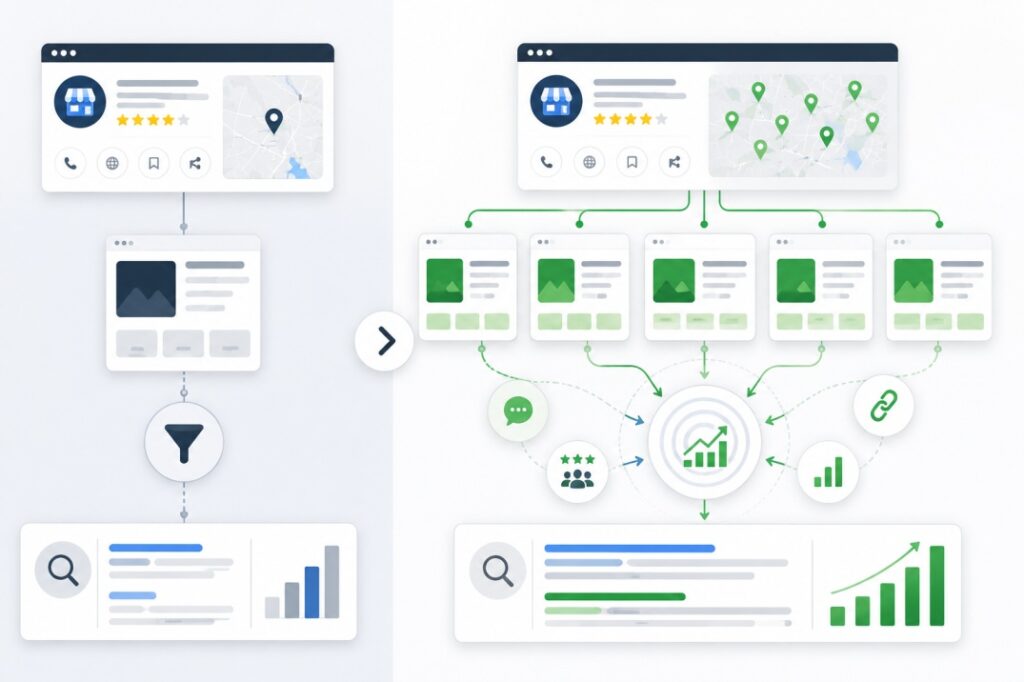
Your GBP is important, but most Fort Worth businesses are only using 40–50% of its available optimization potential. Here’s what’s commonly missed:
Incomplete service listings. Google allows you to add individual services with descriptions. A Fort Worth electrician who adds “panel upgrades,” “whole-home rewiring,” and “EV charger installation” as distinct services with keyword-rich descriptions will outrank a competitor whose profile just says “electrical services.”
No Google Posts cadence. Google Posts appear directly in your Business Profile and act as organic ad placements in local search. Businesses that publish weekly posts about promotions, seasonal services, or educational content signal activity and relevance to Google’s local algorithm, according to Moz’s Local SEO Guide.
Ignoring Q&A. The Questions and Answers section of your GBP is publicly editable. Competitors and customers can post questions there, and if you don’t answer them, someone else will. Proactively seeding this section with your most common customer questions (and answering them with keyword-rich, accurate responses) is an underused tactic in the Fort Worth market.
Missing service area coverage. If your business serves multiple cities across the Fort Worth metro — say, Burleson, Azle, Mansfield, and Haltom City — you need to list all of them in your service area settings. Many businesses leave this blank or only list Fort Worth proper, missing ranking opportunities across the broader Tarrant County search landscape.
Local SEO Beyond the GBP: The Full Fort Worth Strategy
1. Build a Geographically Targeted Website Structure
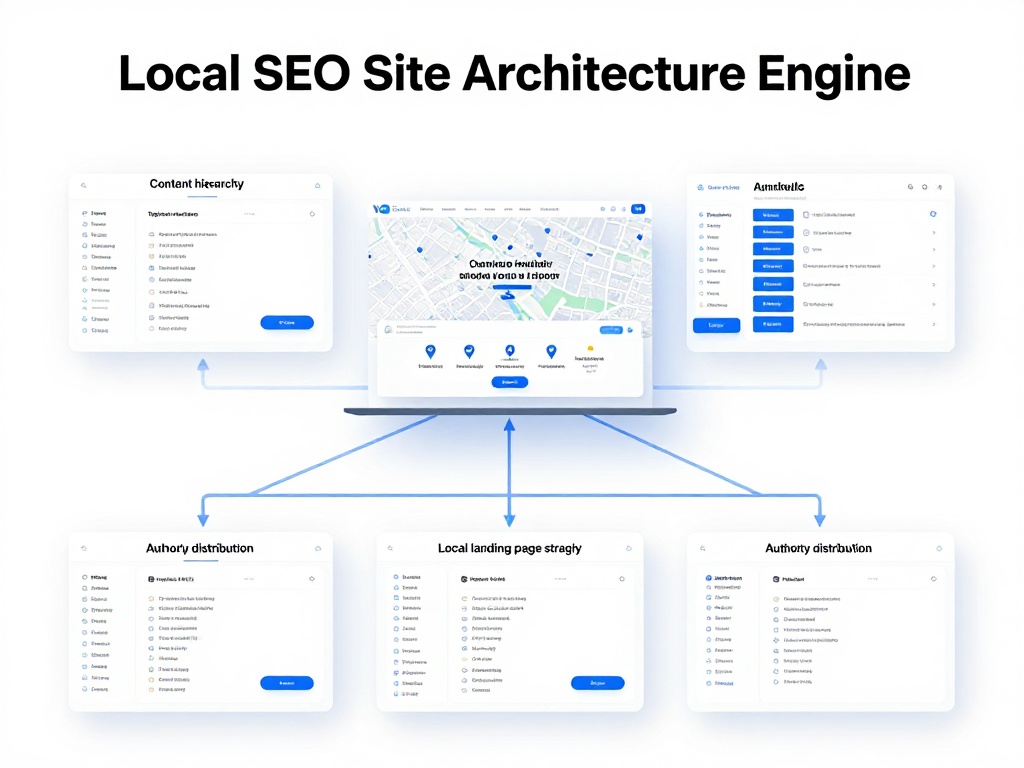
Your website is the second pillar of your local SEO strategy, and it needs to work hand-in-hand with your GBP. For Fort Worth service businesses, this means creating dedicated pages for each major service area you cover.
A roofing company operating across Fort Worth, Keller, Southlake, Grapevine, and Euless should have individual landing pages for each location, not a single page that mentions all cities in a list. Each page should include local references, neighborhood context, and unique content that demonstrates genuine relevance to that specific community.
This is exactly the type of web design and development approach that Massive Designs integrates into local SEO campaigns, building site architecture that supports both ranking signals and user experience.
According to Ahrefs’ local SEO research, businesses with properly structured city and service pages consistently outperform those that rely on a single homepage to carry all local ranking signals.
2. Citation Building and NAP Consistency Across Fort Worth
Citations are online mentions of your business name, address, and phone number (NAP). They appear on directories like Yelp, Angi, the Better Business Bureau, the Fort Worth Chamber of Commerce, and hundreds of industry-specific sites.
Google uses citation volume and consistency as a trust signal. If your business name is listed differently across directories — “Massive Plumbing” on one site, “Massive Plumbing LLC” on another, and “Massive Plumbing Co.” on a third — Google’s ability to confidently associate those citations with your business weakens.
For Fort Worth businesses, Texas-specific directories carry extra weight. Getting listed with the Fort Worth Chamber of Commerce, Tarrant County business listings, and regional trade associations sends strong geographic relevance signals. National directories like Google Business Profile, Bing Places, and Apple Maps are table stakes, but local and industry-specific citations are what separate top-three rankings from page-two obscurity.
3. Review Strategy: Volume, Recency, and Response Rate
Reviews are one of the most powerful local ranking factors according to Google’s own documentation on local search ranking. Fort Worth service businesses need a systematic approach to review generation, not a reactive one.
Velocity matters. Ten reviews in one week followed by nothing for six months is a red flag to Google’s algorithm. A steady stream of three to five reviews per month signals consistent customer activity and business health.
Recency matters. Searchers and Google both weight recent reviews more heavily than older ones. A Fort Worth HVAC company with 200 reviews, but the most recent one being eight months old, can lose ground to a competitor with 60 reviews but five posted in the last 30 days.
Response rate matters. Responding to reviews — both positive and negative — is a documented ranking signal and a critical trust factor for potential customers. According to Search Engine Journal, businesses with high response rates consistently outperform non-responders in local pack rankings.
4. Local Link Building in the Fort Worth Market
Backlinks from local and regionally relevant websites remain one of the strongest ranking signals in both local and organic SEO. For Fort Worth businesses, the opportunity lies in building links from:
- Local news publications (Fort Worth Star-Telegram, Fort Worth Business Press)
- Fort Worth neighborhood blogs and community forums
- Tarrant County nonprofit organizations you support
- Local sponsorships (youth sports teams, charity events, community festivals)
- Industry associations based in North Texas
A Fort Worth dentist who sponsors a youth soccer team in Keller and earns a backlink from that league’s website has built a geographically relevant, topically trusted link that most competitors don’t have. These local signals compound over time and create a link profile that’s genuinely hard to replicate.
Our content marketing services help Fort Worth businesses earn these links naturally through well-positioned, locally authoritative content.
5. On-Page SEO: Localizing Your Content at the Page Level
Every service page on your website should be locally optimized. This means:
- Including the target city and neighborhood in your H1, title tag, and meta description
- Embedding a Google Map of your service area or business location
- Writing body content that references local landmarks, neighborhoods, or community context
- Using structured data markup to tell Google exactly who you are, where you operate, and what you do
Schema markup — specifically LocalBusiness schema — is one of the most underused tools in Fort Worth local SEO. Properly implemented schema tells Google Search your business name, address, phone number, hours, service areas, and more in a structured format that feeds directly into AI Overviews and featured snippets.
According to Google’s Structured Data documentation, businesses with properly implemented LocalBusiness schema are significantly more likely to appear in rich results and knowledge panels.
Local SEO for Fort Worth Service Businesses: Industry-Specific Considerations
Different service verticals in Fort Worth face different competitive landscapes. Here’s how local SEO strategy shifts by industry:
Home Services (HVAC, Plumbing, Roofing, Electrical)
The home services vertical is the most competitive category in Fort Worth local SEO. National aggregators like HomeAdvisor, Angi, and Thumbtack dominate organic listings, which means GBP visibility and local pack rankings are even more critical. Hyper-local content targeting specific neighborhoods (Westover Hills, Westcliff, Ridglea) can help independent businesses outflank both national directories and larger local competitors.
Legal Services
Law firms in Fort Worth face strict advertising regulations, but local SEO has no such restrictions. Practice-area-specific pages (personal injury, family law, criminal defense) combined with city-level targeting (Fort Worth, Arlington, Mansfield) create a powerful local organic footprint. Google’s E-E-A-T (Experience, Expertise, Authoritativeness, Trustworthiness) standards are especially stringent for legal content, which means genuine attorney-authored content dramatically outperforms generic legal copy.
Healthcare and Dental
Healthcare searches in Fort Worth carry high commercial intent; someone searching “emergency dentist Fort Worth” is ready to book an appointment. Optimizing for same-day, emergency, and near-me modifiers, combined with a strong GBP and reputation management strategy, drives measurable new patient acquisition.
How Google’s Local Algorithm Ranks Fort Worth Businesses
Google uses three primary factors to determine local search rankings:
Relevance — How closely does your business match what the searcher is looking for? Businesses with complete, keyword-rich GBP profiles, service-specific landing pages, and consistent category signals rank higher for relevant queries.
Distance — How close is your business to the searcher’s location? While you can’t move your physical location, you can expand your perceived service area through location-specific content, service area settings in your GBP, and citations from hyperlocal sources.
Prominence — How well-known and trusted is your business online? This is where reviews, backlinks, citations, and overall online presence come into play. A Fort Worth business with 200 reviews, 150 citations, and 50 local backlinks will outrank a competitor with a polished website but minimal off-site presence.
Understanding these three levers gives Fort Worth service businesses a roadmap for where to invest their local SEO effort. If you’re not ranking despite a complete GBP, the issue is almost always prominence, which requires a more aggressive content, link, and review strategy.
Tracking Your Local SEO Performance in Fort Worth
You can’t manage what you don’t measure. Fort Worth businesses running local SEO campaigns should be tracking these metrics monthly:
- Local pack ranking positions for target keywords across Fort Worth and surrounding service areas
- Google Business Profile insights — searches, views, direction requests, and website clicks
- Organic traffic from Texas-based users via Google Analytics
- Keyword ranking data across local and geo-modified terms via Google Search Console
- Review velocity and average rating across Google, Yelp, and industry-specific platforms
- Citation accuracy score across major directories
Tracking these signals monthly allows you to identify whether your strategy is gaining traction, plateauing, or losing ground to competitors, and adjust accordingly.
Fort Worth Local SEO: The Competitive Advantage Most Businesses Are Leaving on the Table
Most Fort Worth service businesses are running the same basic local SEO playbook: GBP, some reviews, and a basic website. The businesses that break away from that pack are the ones investing in technical site health, local content depth, citation authority, and strategic link building.
The DFW Metroplex is one of the fastest-growing metro areas in the United States. New residents arrive daily in communities like North Richland Hills, Hurst, Euless, and Bedford, people who have no established loyalty to any local service provider and who are actively searching online for everything from lawn care to legal representation.
That search traffic is available. The question is whether it flows to your business or to a competitor who invested more strategically in local SEO.
If you’re ready to move beyond your Google Business Profile and build a local SEO presence that actually drives leads, contact the Massive Designs team for a strategy conversation. We work with Fort Worth and North Texas service businesses to build complete local SEO systems, not one-time fixes, but long-term visibility engines.
Frequently Asked Questions: Local SEO for Fort Worth Texas
1. What is local SEO and how does it work for Fort Worth businesses?
Local SEO is the process of optimizing your online presence to appear in geographically relevant search results. For Fort Worth businesses, this includes optimizing your Google Business Profile, building local citations, earning local backlinks, and creating location-specific content so Google understands where you operate and who you serve.
2. How long does local SEO take to show results in Fort Worth?
Most Fort Worth businesses begin seeing measurable improvements in local rankings within 60–90 days of implementing a structured local SEO strategy. Highly competitive verticals like HVAC or law may take 4–6 months to reach top-three local pack positions.
3. Do I need separate pages for each city I serve in the Fort Worth area?
Yes. Creating dedicated landing pages for each major service area, such as Fort Worth, Keller, Southlake, and Mansfield, allows Google to rank your business for city-specific searches across your service area. A single homepage cannot effectively target multiple locations.
4. How many Google reviews does my Fort Worth business need to rank in the local pack?
There is no fixed number, but consistency and recency matter more than total volume alone. Most businesses ranking in the top three for Fort Worth service keywords have a combination of strong review counts (50+), consistent recent review velocity (3–5 per month), and active owner responses.
5. What are local citations and why do they matter in Fort Worth?
Local citations are online mentions of your business’s name, address, and phone number (NAP) on directories, review sites, and business listings. They signal to Google that your business is legitimate and locally relevant. Fort Worth-specific citations from the Chamber of Commerce and Tarrant County business directories carry additional geographic authority.
6. Is my Google Business Profile enough to rank locally in Fort Worth?
Not in competitive markets. Your GBP is essential but only one component of a complete local SEO strategy. Without supporting website optimization, local citations, backlinks, and content, your GBP alone will struggle to break into the top local pack positions for high-competition keywords.
7. How does voice search affect local SEO for Fort Worth businesses?
Voice searches are typically phrased as full questions (“Who is the best plumber near me in Fort Worth?”) and favor businesses with well-optimized GBP profiles, strong review scores, and FAQ-style content on their websites. Structuring your content to answer direct questions improves both voice search visibility and AI Overview appearances.
8. What industries in Fort Worth benefit most from local SEO investment?
Home services (HVAC, plumbing, roofing, electrical), legal services, dental and medical practices, real estate, and restaurants see the highest return on local SEO investment in Fort Worth due to high search volume and strong purchase intent among local searchers.
9. Can I do local SEO myself or do I need an agency?
Basic local SEO tasks like GBP optimization and review management can be self-managed. However, building the technical infrastructure, city-level content, link-building campaigns, and citation authority required to rank competitively in the Fort Worth market typically requires professional support with proven local SEO experience.
10. How does Massive Designs approach local SEO for Fort Worth businesses?
Massive Designs builds complete local SEO systems for Fort Worth and North Texas businesses, combining technical website optimization, location-specific content strategy, citation building, and link acquisition. Our North Richland Hills base gives us genuine insight into Tarrant County search behavior and competitive dynamics.