A landscaping company in Southlake and a B2B software firm in Irving both need logos. They might even pay similar amounts. But what they receive and what that purchase does for their business, can be separated by a gap so wide that calling them the same service is like calling a pickup truck and a semi the same vehicle because both have four wheels.
The $500 vs. $5,000 question comes up constantly in conversations about branding and logo design in Texas. It sounds like a pricing discussion. It is actually a deliverable discussion, a process discussion, and, for growing businesses, a strategic positioning discussion dressed up as a budget line item.
This guide breaks down exactly what changes between those two price points: what you physically receive, what thinking went into it, and how the gap between them shows up in real Texas business contexts. The existing question most buyers ask — ‘Is it worth paying more? ‘- is the wrong question. The right question is: ‘What am I actually buying at each tier, and does that match where my business is right now?’
The $500 Logo: What It Buys and Where It Breaks
At $500, you are purchasing execution. The designer opens a brief, often a short intake form or a brief call, and starts building. Speed is part of the value proposition. Files arrive within a few days. They are often clean, competent, and visually acceptable.
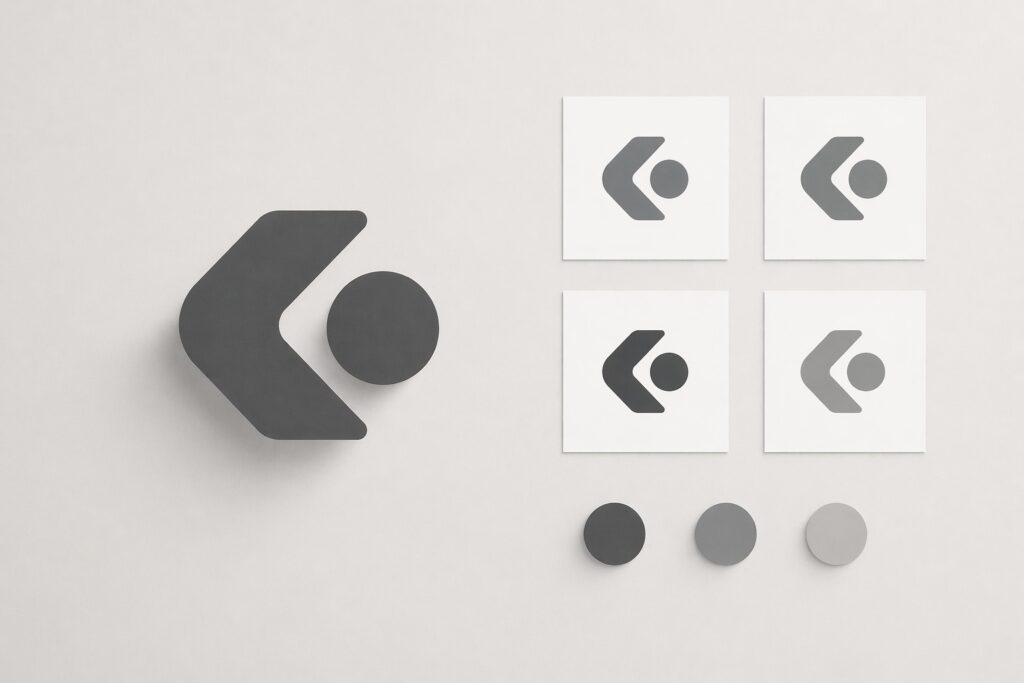
What is structurally absent at this price point has nothing to do with the designer’s talent. It is a time-and-economics problem. A professional designer billing $75 per hour cannot spend more than six to seven hours on a $500 project and remain profitable. Six hours is enough to produce one solid concept with two revisions. It is not enough time to research your competitors, map your audience’s visual expectations, test the logo across contexts, or document any strategic rationale.
What You Receive at $500
- One to two logo concepts, often variations on a similar visual direction
- Raster files (JPEG, PNG) — sometimes vector, sometimes not, depending on the designer
- Little or no competitive research — the designer works from your brief alone
- No brand guidelines — the logo exists as a standalone file
- Revisions capped at one or two rounds — further changes often cost extra
- No strategic documentation explaining why the visual decisions were made
Where does this break down? The answer depends heavily on what the logo has to do. A $500 logo can serve a local service business that competes primarily on word-of-mouth and price. A handyman, a mobile car wash, a single-location food truck, these are contexts where a clean, functional mark does its job without needing strategic depth.
The breakdown happens the moment the logo is asked to represent the business in a competitive comparison: a procurement bid, an investor deck, a pitch to a sophisticated buyer who evaluates vendors partially on visual credibility. In those contexts, a logo that communicates ‘I prioritized speed and cost’ is a liability before the conversation begins.
The $5,000 Logo: What the Additional Investment Actually Funds
At $5,000, the budget change is not a quality upgrade to the same process. The process itself changes fundamentally. More accurately, the process exists at the professional tier in a way it structurally cannot at $500.
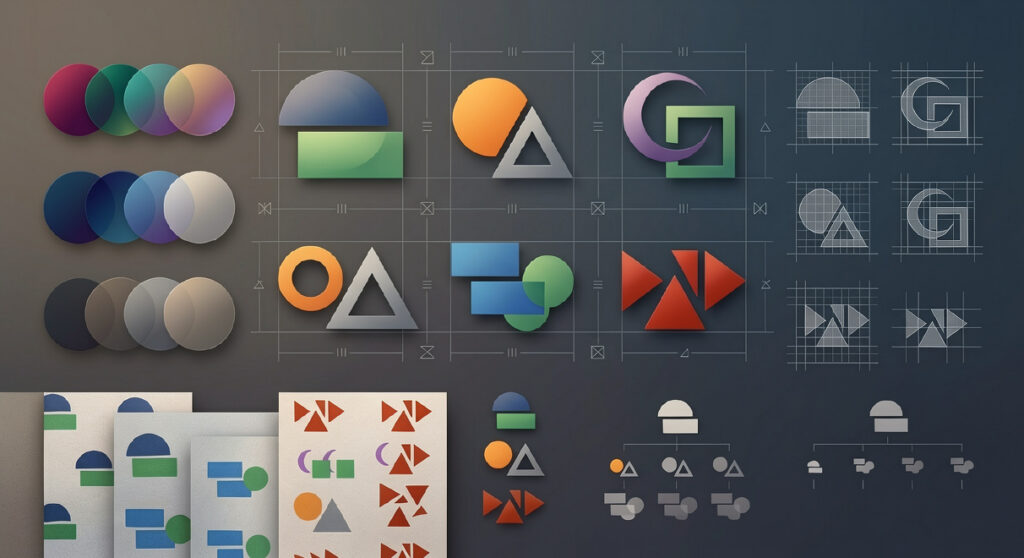
A $5,000 engagement at a reputable Texas branding studio typically funds 40 to 60 hours of work. That time budget allows something a $500 engagement cannot: the research that should precede every visual decision but rarely does at lower price points.
What You Receive at $5,000
- A discovery and brand brief session — 60 to 90 minutes with structured questions about audience, positioning, and competitive context
- Competitive visual audit — a mapped review of how existing players in your category present visually, and where the gaps are
- Three or more distinct concept directions, each grounded in a different strategic interpretation of the brief
- Vector master files in every format: AI, EPS, SVG, PDF, with RGB, CMYK, and Pantone color codes
- A documented visual system: horizontal and vertical lockups, icon-only variants, light and dark versions
- Brand guidelines — a reference document that tells any designer, printer, or developer how to apply the brand consistently
- Typography recommendations with licensing details
- Written rationale for design decisions, traceable back to the original brief
The output difference is substantial. But the more important difference is invisible on the deliverables list: a $5,000 logo reflects research-informed decisions. Every color, every typeface, every proportion was chosen because it communicates something specific to a defined audience. That is what ‘strategic’ means in a branding context, well, not aesthetics, but documented decisions made with a reason.
The Process Gap Is Bigger Than the Price Gap
Buyers comparing quotes often focus on what they see in the portfolio. Two logos can look equally polished in a side-by-side comparison while representing completely different levels of underlying process. This is the uncanny valley of mid-range logo design: something that looks professional without being strategically grounded.
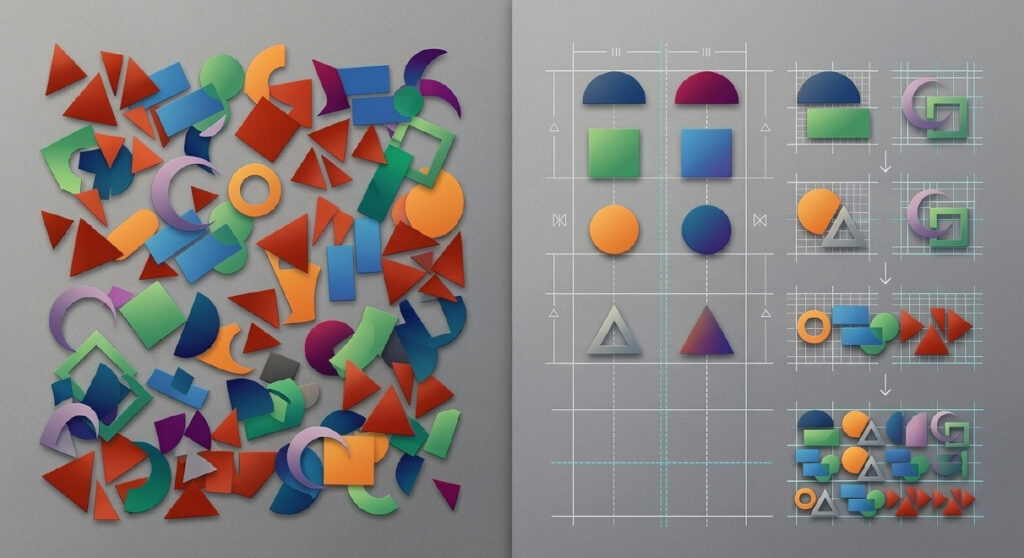
The clearest diagnostic for whether a logo engagement has a real process behind it is deceptively simple: did the designer present a written brief before starting any visual work? A brief documents what the brand stands for, who it serves, the competitive context, and what the visual system needs to communicate. Designs built without a documented brief reflect whatever the designer intuitively thinks looks good, rather than what your brand specifically needs to communicate to your audience.
At $500, a brief is almost never formalized. At $5,000 from a credible studio, it is mandatory. That difference alone accounts for most of the outcome gap between the two tiers.
Texas Industry Context: When the Gap Matters Most

The stakes attached to this gap differ meaningfully depending on your industry. Texas businesses operate across some of the country’s most demanding competitive sectors, and visual credibility thresholds vary sharply between them.
Oil, Energy, and Industrial Services
In the Texas energy corridor spanning Houston, Midland, and the broader Permian Basin supply chain, vendor credibility is established before the first meeting. Procurement teams at major operators evaluate subcontractors partially on the visual maturity of their materials. A $500 logo on a proposal to a Fortune 500 energy company signals ’emerging vendor,’ regardless of operational capability. The visual expectation here is institutional: confident, structured, and stable.
Healthcare and Medical Practices
Texas healthcare brands, from multi-location dental groups to specialty clinics face a dual credibility challenge. They need to signal trust to patients and competency to referring physicians simultaneously. Color psychology in healthcare is governed by documented research on patient perception, not aesthetic preference. A logo that feels warm to patients may read as insufficiently clinical to a specialist audience. Professional-level engagements navigate this tension through research. Budget engagements typically don’t know the tension exists.
Real Estate and Property Development
DFW’s real estate market is extraordinarily competitive, and the visual language of aspiration is well-established in this sector. Buyers of luxury properties, developers seeking investor capital, and commercial brokers pitching institutional clients all operate in an environment where visual identity directly affects perceived price point. A logo that reads ‘residential realty’ cannot support a commercial development pitch — and the difference between those two visual registers is a strategic research problem, not a stylistic one.
B2B Technology and SaaS
Texas Tech brands centered around Austin but expanding rapidly across Dallas, Frisco, and the broader DFW corridor compete in a visual environment shaped by Silicon Valley standards. Enterprise software buyers are visually sophisticated. A logo that would read as professional in a retail context can read as amateur to a procurement director at a mid-market technology company. The visual language of precision, scale, and forward-motion in B2B tech requires research-informed design decisions that $500 cannot fund.
The Dangerous Middle: Why $1,500 Often Disappoints More Than $500
There is a counterintuitive truth in the Texas branding market that most pricing guides skip: the $1,200 to $2,000 mid-range often produces the worst outcome relative to expectation, and a worse outcome than a clear-eyed $500 engagement.
Here is why. At $500, both the buyer and the designer understand what is being purchased: execution at speed, with no pretense of strategic depth. Expectations are calibrated. At $1,500, buyers often expect studio-level process, discovery, research, multiple concept directions, and, because the price feels like it should include those things. But most mid-range freelancers operating in this band are still capacity-constrained. They have more craft than a $500 designer, but not enough time budget to run a real research process. The result is a logo that looks more polished than a $500 output, but was built on the same basis, intuition and speed.
That gap between expectation and reality is where the most damaging outcomes live. A buyer who spends $1,500 and is disappointed is less likely to invest correctly at $5,000 than a buyer who spent $500 and understood exactly what they got.
How to Decide: A Decision Framework for Texas Business Owners
The correct investment tier depends on your business stage, not your aesthetic preference. Three questions clarify it:
Question 1: Who will this logo represent you to?
If your primary audience is local consumers making low-consideration purchases, a $500 to $1,500 engagement may serve your needs. If your logo will appear in procurement bids, investor presentations, enterprise sales proposals, or any context where a sophisticated buyer makes a judgment before the first conversation, the $5,000 tier is not optional — it is the minimum viable investment.
Question 2: How long do you need this logo to hold?
A logo built without strategic research typically fails within 18 to 36 months, not because it stops looking good, but because the business outgrows the assumptions embedded in a quick engagement. A $500 logo for a pre-revenue startup is rational. That same logo at $1M in annual revenue creates friction with your growth narrative.
Question 3: What does visual credibility cost in your specific competitive context?
If every credible competitor in your category has a professionally developed brand identity, showing up with a budget mark signals something specific to buyers. That signal is not about aesthetics. It is about whether you invest in your own business infrastructure the way you will invest in theirs.
What to Look For When Evaluating Texas Branding and Logo Design Providers
The portfolio tells you about output quality. The process tells you about what you are actually buying. Before committing to any branding and logo design engagement in Texas, ask these questions:
- Do they begin with a written discovery brief before any visual work starts?
- Can they articulate who your target audience is and how that informed their design approach?
- Do they present three or more genuinely distinct concept directions — not variations on one idea?
- Are vector source files (AI, EPS, SVG) included as standard, not as paid add-ons?
- Do they provide brand guidelines that tell another designer how to apply the identity correctly?
- Can they explain their competitive research process and what it revealed about your category?
- Does their portfolio show range across industries — or only one aesthetic applied repeatedly?
A designer who answers all of these affirmatively is operating at the professional level regardless of their price point. A designer who cannot answer most of them is delivering execution, not strategy. And charging accordingly, or should be.
The Five-Year View: Why the Investment Gap Narrows Over Time
A $500 logo that requires a rebrand at year two has a real total cost. The original $500 plus the rebrand investment ($3,500 to $7,000 at professional rates) plus the operational cost of updating every touchpoint, website, signage, proposals, email templates, and social profiles. That rebrand rarely happens at a convenient moment. It typically happens when a growth event, a funding round, a major client win, or a new competitive bid makes the existing identity visibly inadequate.
$5,000 logo with complete brand guidelines and a documented visual system absorbs growth without breaking. The initial investment funds an infrastructure that scales with the business, eliminating the rebrand cycle that budget engagements almost always create.
When evaluating this long-term ROI, it becomes clear that the real cost of professional logo design for growing brands in 2026 is actually lower than the compounding expense of frequent rebrands and the loss of visual credibility in every sales conversation.
Over a five-year horizon, the $5,000 engagement is typically less expensive than two $500 engagements plus a mid-cycle rebrand, and it eliminates the compounding credibility cost that a visually immature brand creates in every sales conversation between now and that rebrand.
Final Thought: The Right Question
The $500 vs. $5,000 question is not really about budget. It is about what stage your business is at and what that logo needs to do. A $500 engagement is the right choice for a business that needs a functional mark quickly, understands what it is buying, and has a realistic plan for when it will outgrow it.
For a Texas business that is competing for serious contracts, building toward scale, or positioning against sophisticated competitors, $5,000 spent on a research-led brand identity is not a discretionary investment. It is the minimum infrastructure that competitive positioning requires.
Massive Designs is based in North Richland Hills, Texas, and builds brand identities for growing Texas businesses across branding and logo design. Every engagement begins with a formal discovery session before any visual work starts. If your current logo was built without one, it may be telling your prospects something you never intended.