
Most Texas businesses approach platform selection the way they approach buying office equipment. They pick what looks familiar, fits the budget, and ships without much friction. Six months in, the content calendar looks full, output is consistent, and the lead pipeline still hasn’t moved. The platform did not fail. The selection process did.
Content marketing platforms don’t perform identically across every Texas market. A Dallas-based B2B software firm needs fundamentally different infrastructure than a Houston energy services company or an Austin-based consumer brand. Yet most comparison articles treat “best tool” as a universal answer rather than a context-specific decision. What follows is an honest breakdown of the platforms Texas content teams are running in production, and what decision-makers need to understand before committing budget to any of them.
Why Platform Choice Shapes Far More Than Your Publishing Schedule
A content platform does not just organize what you publish. It determines how your team thinks about content, what gets prioritized, what gets measured, and whether content eventually connects to revenue or stays permanently stuck at awareness-level metrics.
Texas businesses competing in dense local verticals, legal, healthcare, financial services, B2B technology, and energy need platforms that manage the full operational cycle: research, creation, SEO optimization, distribution, and performance tracking. Teams that fragment these into separate disconnected tools end up managing five competing subscriptions instead of one coherent system.
Additionally, platform architecture directly shapes team behavior over time. Editorial tools that bury analytics inside separate dashboards produce teams that stop checking analytics altogether. Platforms that surface optimization feedback during the actual drafting process produce teams that consistently act on it. That behavioral difference compounds significantly across twelve months of production and shows up clearly in content quality and ranking consistency.
Comparing the Platforms Texas Teams Are Running in 2026

HubSpot Content Hub
HubSpot remains the most widely adopted content platform among Texas SMBs that already operate inside the HubSpot CRM ecosystem. Its primary advantage is workflow integration, not optimization depth. When your sales pipeline, email sequences, landing pages, and blog all live inside one platform, attribution reporting gets considerably cleaner, and that consolidation alone justifies the decision for many teams managing mixed sales and marketing operations.

However, HubSpot’s content optimization features run broad rather than deep. Teams that need granular semantic analysis or competitive content gap identification typically pair it with a dedicated SEO tool to compensate. It performs strongest when content volume stays moderate and the primary goal involves nurturing prospects already inside the funnel, not attracting fresh organic traffic from competitive, high-intent search terms.
Semrush Content Marketing Toolkit

Semrush offers Texas teams competing in crowded local verticals a genuinely meaningful operational edge. The Topic Research module surfaces content gaps that competitors haven’t addressed. The SEO Writing Assistant grades content in real time inside Google Docs or WordPress, evaluating readability, keyword integration, tone consistency, and semantic completeness as writers draft, not after the fact.
Consequently, teams without a dedicated SEO reviewer get meaningful quality control built directly into the writing process rather than appended as a separate review stage. Furthermore, the Content Audit module identifies underperforming pages already on your site, consistently revealing quick-win optimization opportunities before new production becomes the answer.
The limitation worth stating clearly: Semrush’s content planning features assume the user understands keyword intent segmentation before opening the tool. Teams without a structured content marketing foundation often purchase the platform and then significantly underuse it. Strategy needs to precede the investment, not follow it.
Clearscope
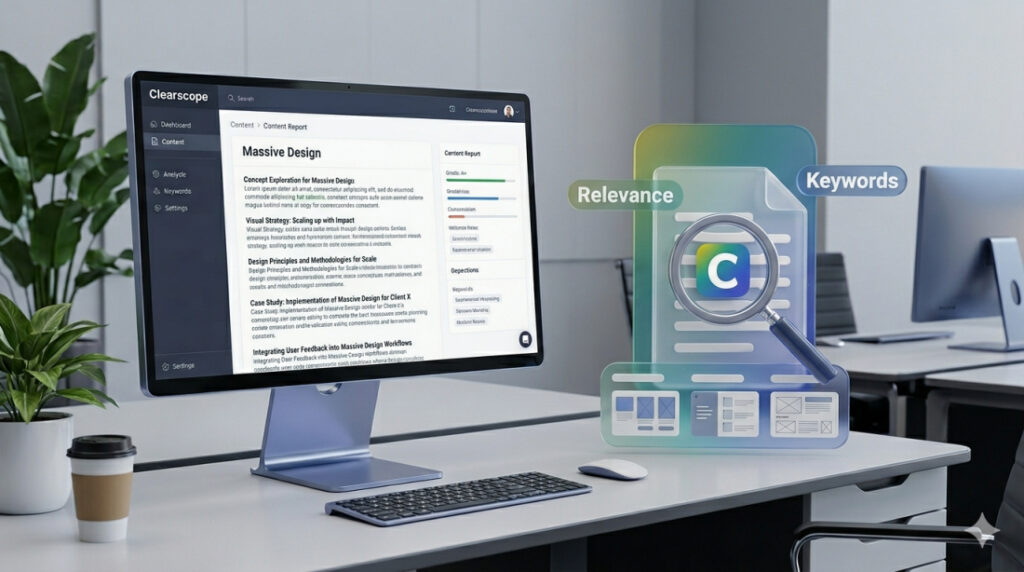
Clearscope addresses a specific failure pattern that most Texas businesses misdiagnose: content that ranks briefly, then drops. Standard on-page optimization focuses on keyword frequency and density. Clearscope focuses in lieu on semantic completeness, grading content against the full range of related terms, subtopics, and conceptual coverage that top-ranking pages consistently include.
For industries where a single well-ranked page drives steady inbound leads over 12 to 18 months — B2B technology, healthcare, legal services, financial advisory, the investment recovers its cost measurably. Clearscope doesn’t manage campaigns or distribution. Therefore, it functions best alongside a broader editorial system rather than as a standalone solution. Notably, its grade reports also serve as effective pre-draft content briefs, giving writers a clear quality benchmark before drafting begins, which reduces revision cycles considerably.
CoSchedule Marketing Suite

CoSchedule solves a fundamentally different problem: editorial coordination across distributed contributors. Texas marketing teams managing internal writers, agency partners, and freelancers simultaneously tend to lose production velocity to approval delays, calendar conflicts, and genuine ambiguity around task ownership.
CoSchedule’s calendar management, task assignment, and publication scheduling sit in one view — reducing coordination friction without requiring a dedicated project manager to maintain order. Its Headline Analyzer adds a useful calibration layer before publishing, catching weak headlines that quietly suppress click-through rates on otherwise strong content.
The platform’s analytics depth, however, leaves clear gaps for teams measuring content against pipeline outcomes. Therefore, pairing CoSchedule with GA4 or a dedicated attribution setup remains necessary for any team holding content accountable to revenue metrics. CoSchedule organizes production well, but it does not replace performance measurement.
Contently

Contently operates at a higher tier and serves a specific organizational need: managing content at enterprise scale with legal review requirements, strict brand consistency mandates, and high editorial standards across multiple divisions or product lines simultaneously.
Several Dallas-Fort Worth enterprise brands rely on Contently specifically because it integrates talent sourcing, brand guideline enforcement, multi-stage workflow management, and performance analytics in one governed environment. Consequently, the pricing reflects that positioning in full. Smaller Texas businesses rarely justify the structure unless content volume and compliance complexity make internal editorial management genuinely unsustainable.
What Most Platform Comparisons Leave Out Entirely
Feature lists tell you what a platform can do. They don’t reveal what switching costs look like in practice.
Moving platforms mid-strategy even to a demonstrably better tool typically disrupts productive content output for 60 to 90 days. Teams must migrate historical content, retrain contributors, rebuild reporting dashboards, and re-establish editorial cadence from scratch. That disruption compounds sharply when the underlying content strategy lacks structural clarity before the switch begins.
Moreover, most Texas businesses that struggle with content performance aren’t struggling because of the platform they chose. They’re struggling because content production and SEO operate as disconnected functions within the same organization, and no platform closes that internal gap automatically. A defined SEO strategy and a documented production process must exist before any platform investment delivers its full potential. Buying a better tool to paper over a strategy gap produces a more expensive version of the same problem.
Three Questions Texas Teams Should Answer Before Choosing
Most platform decisions skip the questions that actually determine fit. Before purchasing, answer three things with genuine honesty.
First: what does your content specifically need to accomplish: pipeline influence, organic traffic growth, or brand authority? Each goal requires different reporting capabilities, and therefore different platform architecture. Second: how many people actively manage your content, and how distributed is that team? Coordination tooling matters far more as contributor count grows. Third: how tightly does your content currently connect to your SEO strategy in practice, not just in theory?
If content and search optimization run as entirely separate functions inside your business today, switching platforms changes nothing fundamental. Exploring how Texas businesses build a content strategy that actually converts clarifies where platforms fit inside a functioning strategy, and which budget line they genuinely belong in.
Audit What You Already Own Before Purchasing Anything New
Several Texas businesses running full-stack content platforms significantly underuse the tools they already pay for. HubSpot clients routinely ignore the Content Strategy module. Semrush subscribers build keyword lists and stop there. CoSchedule teams use the publishing calendar and skip analytics entirely month after month.
The first audit worth running isn’t a platform comparison. It’s a usage audit of your current toolset. Most teams discover they need stronger strategy implementation, well not a new subscription. Platforms amplify what’s already working and they rarely fix what fundamentally isn’t.