
Most Texas founders who have commissioned a custom app development project will tell you the same thing in hindsight. They did not know what they did not know. They had an idea, found a development partner, and started building without realizing that the most consequential decisions happen before a single line of code is written.
This guide walks through the entire lifecycle of custom app development in Texas, from the moment an idea takes shape to the 90 days after go-live when the real work begins. Either you are a first-time founder in Austin or an established operator in Houston looking to digitize a workflow, this playbook covers what no development agency will tell you during the sales process.
Biggest Mistakes Texas Founders Make Before Hiring
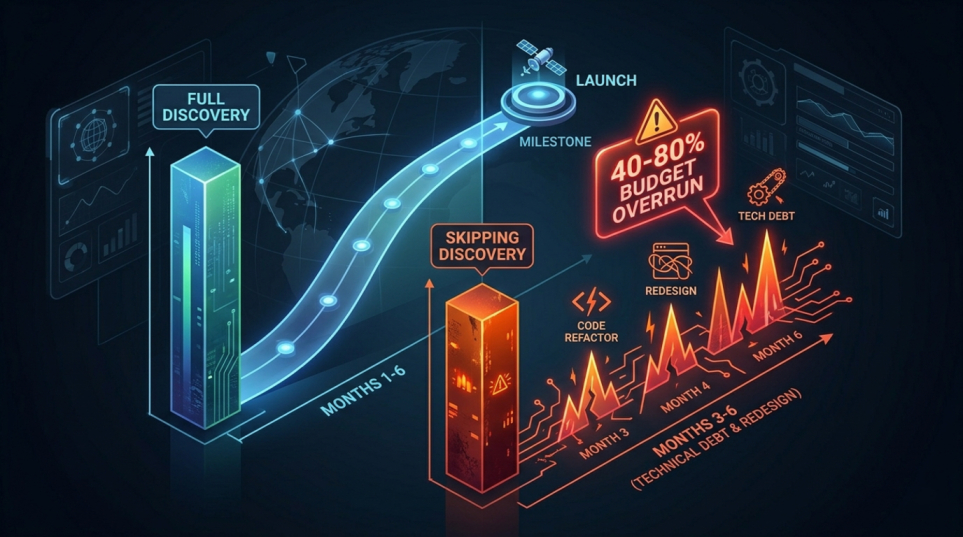
The mistakes that derail app projects almost never happen during development. They happen in the two weeks before a contract is signed.
Skipping the Discovery Phase
Discovery is the structured process of defining your app’s users, core use cases, success metrics, and technical boundaries before any design or development begins. Skipping it is the single most expensive shortcut in software development. Teams that skip discovery routinely rebuild features in month three that could have been avoided with two days of planning in week one.
A genuine discovery process should produce a defined set of user personas, a prioritized feature list, rough wireframes of core screens, and a technical architecture recommendation. If a development partner offers to skip straight to building, that is not efficiency. It is called a liability.
Unclear Scoping Inflates Costs 40–80%
Vague scopes, ‘a marketplace app’ or ‘something like Uber but for lawn care’ give developers nowhere firm to stand. In the absence of clear requirements, agencies build defensively, padding timelines and budgets to cover uncertainty. Industry data consistently shows that poorly scoped projects run 40 to 80 percent over initial estimates.
Clear, documented scoping is not optional. It is the biggest cost-control lever available to a non-technical founder, and it costs nothing but time.
| Key Stat: Projects that skip discovery or enter development with vague scopes run 40–80% over initial budget estimates. Source: software delivery industry benchmarks across US mid-market projects. |
Phase 1: Scoping Your App
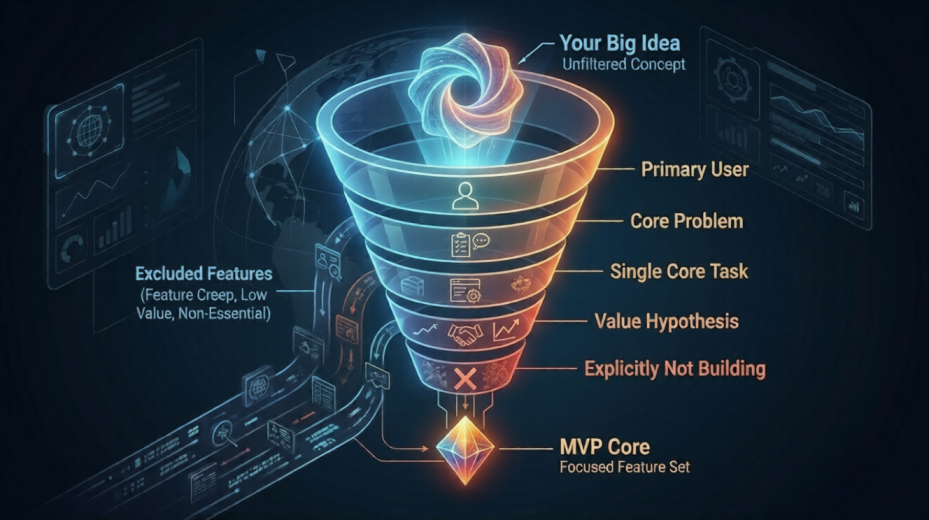
Good scoping is a skill, and it is one that non-technical founders can develop quickly with the right framework.
5-Question MVP Framework
Before booking a single developer meeting, answer these five questions clearly:
- Who is the primary user of this app?
- What one action must they complete for the app to deliver value?
- What is the minimum version that tests that action in the real world?
- What does success look like in 90 days post-launch?
- What am I explicitly not building in the first version?
The fifth question is often the hardest and the most important. An MVP is defined by what you exclude as much as by what you include.
User Story Mapping for Non-Technical Founders
A user story is a one-sentence description of what a specific user does in the app: ‘As a field technician, I want to view my assigned jobs for the day so that I can plan my route.’ Writing forty to fifty of these before your first developer meeting gives any team something specific to price and prioritize.
You do not need to be technical to do this well. You need to know your users better than any developer does — and you probably already do.
When to Hire a Product Consultant
If you do not have a technical co-founder or internal product manager, hiring an independent product consultant for two to four weeks before the main development engagement can save significant money. A good consultant translates your business goals into a documented scope, saving you from paying a development agency to perform that work, at development agency hourly rates.
Phase 2: Finding and Vetting a Texas App Development Partner

The Texas market for custom app development has grown considerably. Austin, Dallas, and Houston each have strong agency ecosystems, but quality varies significantly within every city, and the gap between the best and the rest is wide.
Local vs. Offshore Trade-offs
Texas-based teams offer timezone alignment, shared regulatory context (particularly relevant in healthcare, energy, and fintech), and accountability structures that offshore teams cannot replicate. When a critical bug surfaces at 2 p.m. on a Tuesday, a DFW-based team can meet same-day. An offshore team may respond the following morning.
Austin carries a 10 to 15 percent rate premium over other Texas cities due to high demand and tech company density. Houston offers strong value for healthcare and energy-sector apps, with senior teams available at competitive rates and strong compliance expertise. Dallas is deep in fintech, logistics, and enterprise systems.
10 Vetting Questions
Ask every shortlisted agency these questions before signing anything:
- Can you show me a completed app in a similar category?
- How do you handle scope changes during development?
- What does your QA process look like when timelines compress?
- Who owns the code and all IP upon project completion?
- How do you handle post-launch bugs — included or billed separately?
- Do you carry errors and omissions insurance?
- What project management tool do you use, and will I have access?
- Can I speak directly to a previous client from the last 12 months?
- How do you staff projects — dedicated team or shared resources?
- What is your escalation process when timelines slip?
Agile Sprints Simplified
Most reputable development agencies use some form of agile methodology. In practice, work happens in two-week cycles called sprints. At the end of each sprint, you review what was built. This gives you visibility into progress and the ability to redirect before a problem compounds.
Founders who stay engaged through sprint reviews almost always end up with better products than those who disengage and resurface at launch. Plan for two hours of review time per sprint.
Our mobile app development team runs structured sprints with client review checkpoints built into every phase, so you always know where your project stands.
Phase 3: Development Realities
Even well-scoped projects encounter unexpected complexity. Understanding what to expect during development makes you a far better project partner, and prevents the kind of communication breakdown that adds weeks and dollars to any build.
Timelines by Complexity
| App Type | Scope | Timeline | Est. Cost (TX) |
| Simple Utility App | Login, dashboard, 3–4 core screens | 8–12 weeks | $15,000 – $40,000 |
| Moderate Complexity | Marketplace, 3rd-party APIs, real-time data | 16–24 weeks | $40,000 – $120,000 |
| Enterprise / Regulated | Complex backend, compliance, multi-role | 6+ months | $120,000+ |
Reviewing Sprint Deliverables
During development, your job is to test the app against real user scenarios, well not against the wireframes. The wireframe shows what was planned. User testing shows what actually works. Provide specific, reproducible feedback:
‘On the job assignment screen, when I tap the Complete button, nothing happens on my Samsung Galaxy S22’ is actionable feedback. ‘It feels a bit clunky’ is not.
Pivot vs. Push Framework
At some point in almost every project, you will learn something that changes your assumptions. A user test reveals that nobody wants the feature you spent three weeks building. A competitor launches something that makes your differentiator redundant. The pivot-vs.-push decision, do you change direction or finish what you started is one of the most consequential calls in app development.
Discuss this scenario with your agency before it happens. The time to agree on a decision-making framework is not during a crisis.
Phase 4: Pre-Launch Testing and App Store Submission
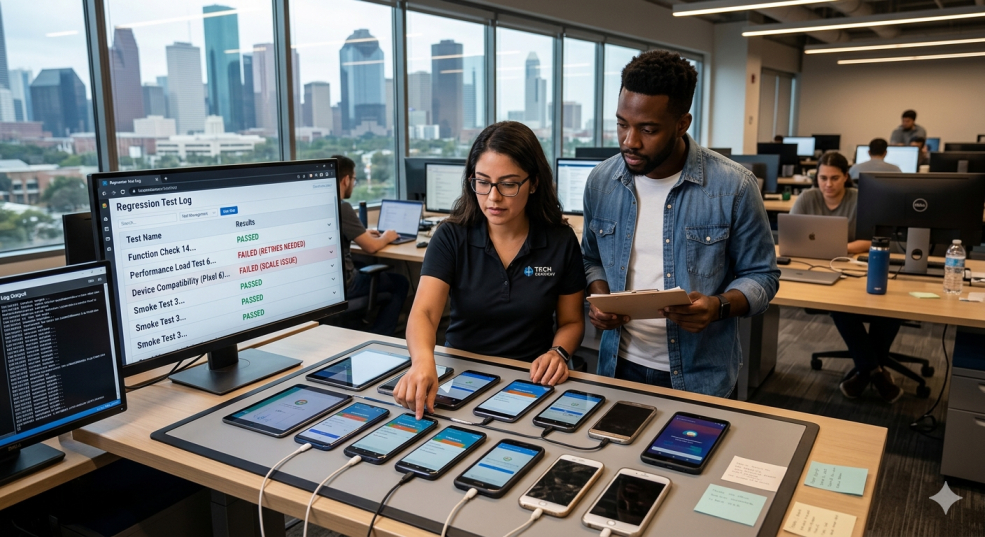
The two to four weeks before go-live are not the time to rush. More apps are damaged in this phase than in any other by shortcuts that save days but cost months of user trust.
QA Testing Essentials
Effective QA for a Texas-market app covers four areas: functional testing (does every feature work as specified?), regression testing (do new changes break existing features?), performance testing (how does the app behave under real-world load?), and device compatibility testing across a range of OS versions and screen sizes.
Texas businesses serving diverse demographics, particularly in Houston and San Antonio should test on mid-range Android devices, not just the latest flagship hardware. Your users’ devices are not the same as your developers’ devices.
Apple vs. Google Submission Tips
Apple’s App Store review typically takes 24 to 72 hours and is more prescriptive. Rejections frequently relate to incomplete privacy policy links, missing app descriptions, or design elements that violate Apple’s Human Interface Guidelines. Google Play is generally faster but requires full compliance with their Developer Program Policies.
Prepare both submissions two weeks before your intended launch date. That buffer allows time for rejection, revision, and resubmission without blowing your go-live milestone.
Phase 5: Post-Launch Work That Determines Success

Launch is not the end of the project. For most apps, it is where the real product development begins. The first 90 days post-launch generate more actionable insight than any amount of pre-launch planning.
First 90-Day KPIs
Define your success metrics before launch, not after. The four metrics that matter most in the first 90 days for a Texas business app:
- Daily Active Users (DAU) — are people returning after day one?
- Day-seven retention rate — a reasonable benchmark for B2B utility apps is 40 percent; consumer apps typically run 20 to 30 percent.
- Session length — are users completing core tasks or dropping off mid-flow?
- Core action completion rate — the percentage of users who complete the single key action your app was built for.
User Acquisition vs. Retention Priorities
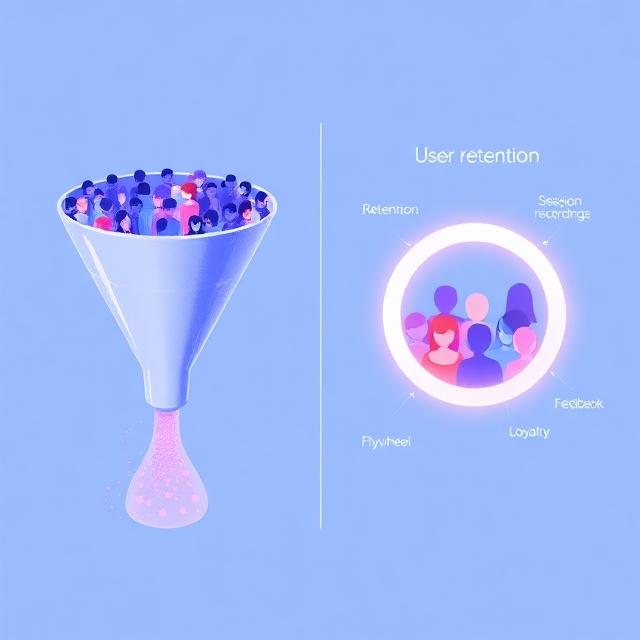
Most founders instinctively focus on user acquisition immediately after launch. The data consistently argues for the opposite priority. Retaining the first 100 users, understanding why they stay, why they leave, and what they love is more valuable than acquiring the next 500.
The insights from your first cohort will shape every feature decision in months two through six. Invest time in direct user conversations, in-app feedback surveys, and session recordings during this window.
For Texas businesses building a complete digital presence alongside their app, our web design and development services ensure your web presence and app experience tell the same brand story, critical for conversion and retention.
Apple’s official App Store guidelines and submission requirements are documented at developer.apple.com/app-store/review/guidelines — a resource every Texas founder should read before their first submission, not after a rejection.
To explore how web presence, content strategy, and app development work as a unified growth system, see our complete service offerings and transparent package options.
FAQ: Custom App Development in Texas
How much does it cost to build a custom app in Texas?
MVPs typically range from $15,000 to $40,000. Moderately complex apps run $50,000 to $120,000. Enterprise-grade builds with compliance requirements can exceed $300,000. Texas rates generally run 20 to 40 percent lower than California for comparable quality — a meaningful structural advantage.
Should I build native or cross-platform?
For most Texas business apps, cross-platform development using Flutter or React Native offers the best cost-to-quality ratio. Native development (Swift for iOS, Kotlin for Android) is preferable when you need deep hardware integration or the absolute highest performance ceiling on a single platform.
Do I own the app after it is built?
Yes, and you must confirm this in writing before signing any contract. Code ownership, IP assignment, and credential transfer should all be explicitly addressed. Any reputable Texas development agency will include these terms by default.
How do I validate my app idea before spending on development?
Run a discovery phase and build a clickable prototype in Figma before committing to development. Test it with ten to twenty real potential users. Their behavior tells you more than any market research document — and costs a fraction of a full build.
What is the most common reason Texas app projects fail?
Skipping or rushing the scoping phase. Founders who enter development with vague requirements consistently encounter scope creep, budget overruns, and products that solve the wrong problem. Discovery is the highest-ROI investment available before development begins.