
Austin is unlike any other city in Texas. It’s a place where a beloved local taco truck competes for digital visibility with a venture-backed food delivery startup. Where a boutique fitness studio runs into the same Google search results as a national gym chain. Where a three-person law firm fights for the same “personal injury lawyer Austin” keyword as a firm spending $50,000 per month on ads.
If you run a small business in Austin, you already feel this pressure. The Austin market is arguably the most competitive digital landscape in Texas, and for good reason. The city has attracted an enormous influx of tech companies, remote workers, and entrepreneurs over the past decade, all of whom are both launching businesses and demanding services from local providers. The competition is fierce, the stakes are high, and generic SEO advice simply won’t cut it.
This guide exists to give Austin small business owners a real, substantive SEO strategy, one built around how Austin searchers actually behave, where your competitors are vulnerable, and how to build lasting organic visibility that doesn’t collapse the moment a competitor outbids you on pay-per-click. SEO for small businesses in Austin, Texas requires a layered, intelligence-driven approach, and that’s exactly what we’re going to walk through.
Why Austin Is the Hardest Local SEO Market in Texas
Austin’s competitive SEO landscape is shaped by several converging forces that don’t exist anywhere else in the state.
Tech-savvy business owners. Unlike many Texas markets, Austin has a significant percentage of business owners with a working knowledge of digital marketing. That means your competitors aren’t just spending money on SEO; they understand it, iterate on it, and invest in it consistently.
National brands with local presence. Austin has attracted major national and international brands that have established robust local SEO footprints. From tech giants on the Domain to national food chains along South Lamar, small businesses compete for the same keyword real estate as organizations with dedicated marketing departments and six-figure budgets.
High population growth creates moving-target demand. Austin’s population has grown dramatically over the past several years, with Travis County consistently ranking among the fastest-growing counties in the U.S. according to U.S. Census Bureau data. New residents searching for dentists, plumbers, attorneys, and restaurants represent fresh demand, but they’re discovering providers primarily through Google, which means whoever ranks wins.
University and transient population dynamics. The University of Texas at Austin feeds a constant rotation of new residents into the market, creating both opportunity and churn. Businesses that rank consistently in organic results capture this transient demand in a way that word-of-mouth referrals simply cannot.
Understanding these dynamics is the foundation of an effective Austin SEO strategy. The SEO services Massive Designs provides are calibrated for competitive Texas markets exactly like this one.
What “SEO for Small Businesses in Austin” Actually Means
Many Austin small business owners confuse SEO with a one-time website optimization task. In reality, SEO in Austin is an ongoing, multi-channel competitive discipline. Let’s define what it actually involves:
Local SEO is about appearing in Google Maps and the local pack for geographically relevant searches (“coffee shop near UT Austin,” “best pediatric dentist South Austin”). It’s driven by your Google Business Profile, citations, reviews, and local content.
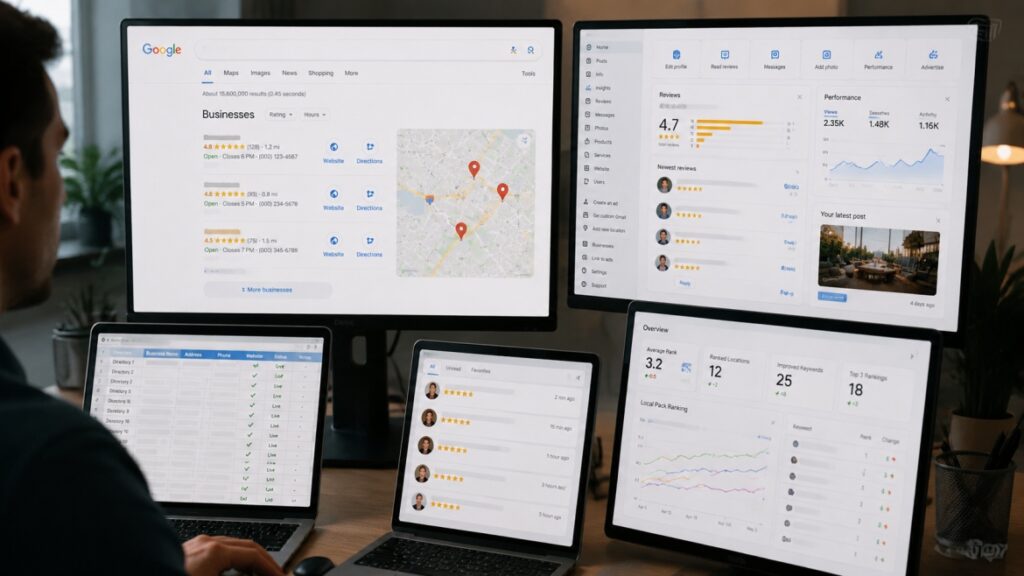
Organic SEO is about ranking in the standard search results below the local pack. For Austin small businesses, this means getting your service pages and blog content to rank for terms like “Austin bookkeeping services” or “small business marketing Austin TX.”

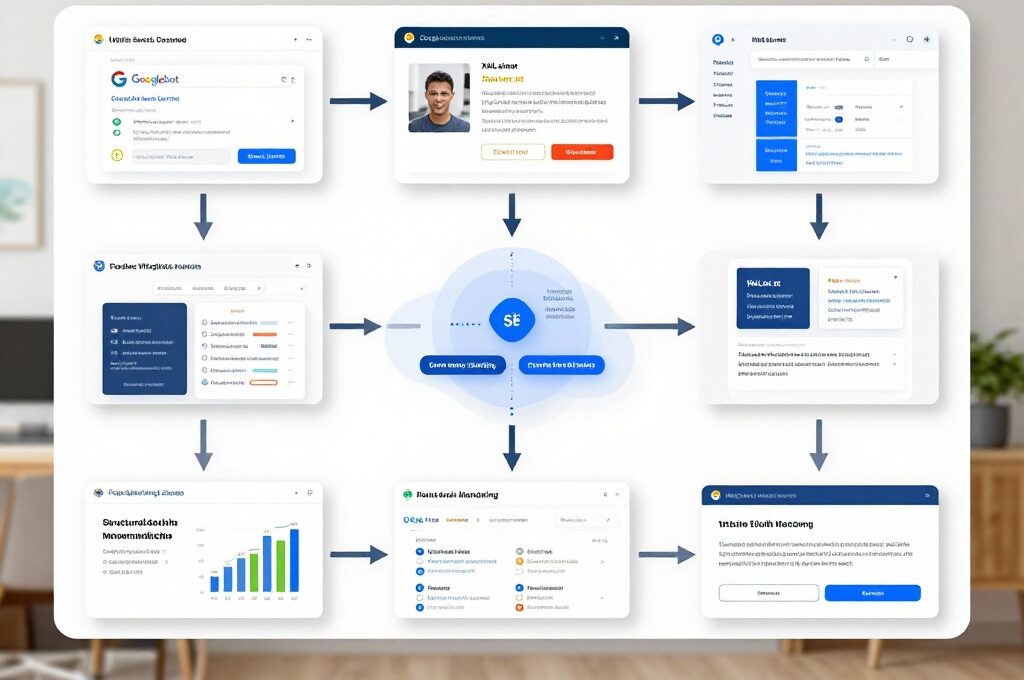
Technical SEO ensures Google can crawl, index, and understand your website. In competitive markets like Austin, technical issues — slow page speed, missing schema markup, crawl errors- can cost you rankings you’d otherwise deserve.
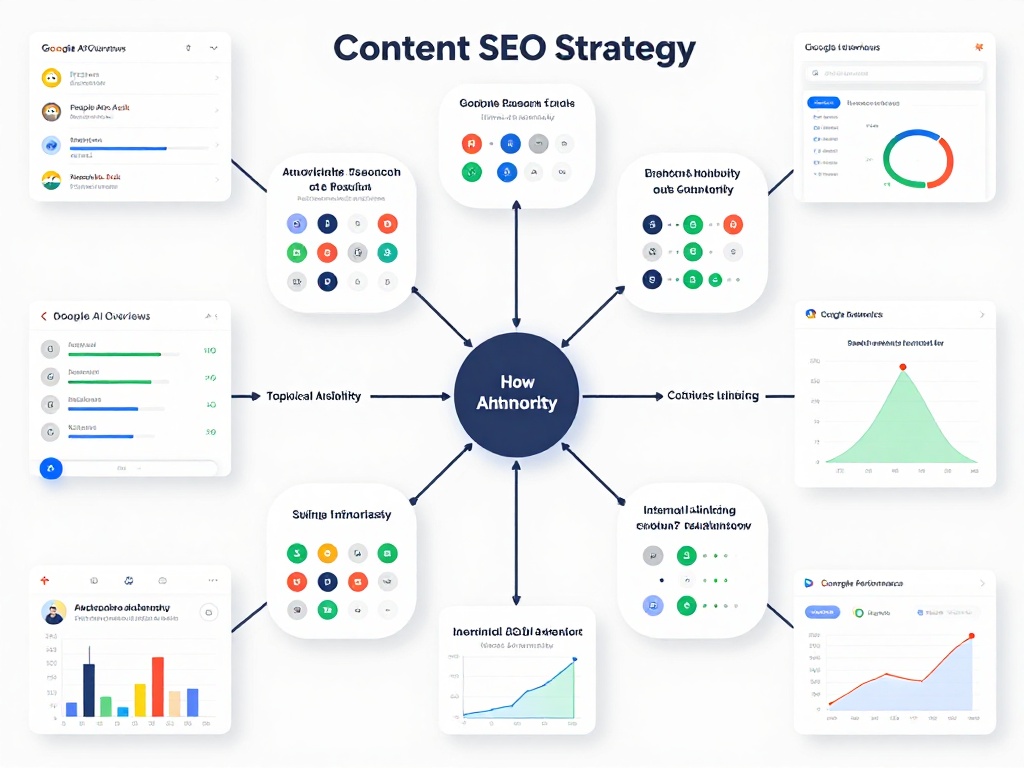
Content SEO is the process of building authoritative, search-intent-aligned content that earns rankings, backlinks, and AI Overview visibility over time. This is where Austin small businesses have their greatest opportunity to outperform larger competitors.
A complete Austin SEO strategy integrates all four of these pillars. Our digital marketing services are built on exactly this framework, combining technical excellence, local authority, and content depth into a single coordinated system.
Keyword Research for Austin Small Businesses: Finding Your Ranking Opportunities
In a saturated market, keyword selection is everything. The most common mistake Austin small businesses make is targeting head terms — “Austin lawyer,” “Austin dentist,” “Austin restaurant” — that are dominated by aggregators, national brands, and high-domain-authority competitors.
The smarter approach is to target a combination of:
Neighborhood-modified keywords. Austin’s geographic diversity creates ranking opportunities that many businesses overlook. “Acupuncture South Congress Austin,” “yoga studio Mueller Austin,” or “electrician East Austin” are substantially less competitive than their city-level equivalents and convert at higher rates because searchers using neighborhood modifiers are closer to a purchase decision.
Service-specific long-tail keywords. “Custom wedding cakes Austin,” “emergency roof repair Cedar Park,” or “bilingual family law attorney Austin” are longer, more specific, and more commercially intent-driven than their shorter equivalents. According to Ahrefs keyword research, long-tail keywords drive the majority of search traffic despite having lower individual volumes.
Comparison and review intent queries. Austin residents research heavily before committing. Queries like “best HVAC company Austin Texas reviews” or “Austin web designer vs national agency” signal research-phase intent that can be captured with authoritative comparison and review content.
Problem-aware searches. “Why is my water heater making noise Austin” or “how to fix a leaking roof Austin winter” capture searchers at the awareness stage. A plumbing or roofing company that ranks for these queries earns brand familiarity before the emergency purchase decision, which dramatically improves conversion rates when that decision finally happens.
Use Google Search Console to identify which queries are already driving impressions to your site but not yet clicks — these are near-miss opportunities that targeted content can convert into rankings.
Local SEO Fundamentals for Austin Small Businesses
Optimizing Your Google Business Profile for Austin
Your Google Business Profile is your most powerful local SEO asset in Austin, but most small businesses use it at 30–40% of its potential. Here’s what a fully optimized Austin GBP looks like:
- Complete and accurate business information with consistent NAP (name, address, phone number) across all platforms
- All relevant categories selected — Google allows a primary category plus additional secondary categories. An Austin fitness studio might use “Gym” as primary with “Yoga Studio,” “Personal Trainer,” and “Fitness Center” as secondaries.
- Keyword-rich business description that naturally incorporates your primary service terms and Austin-specific context
- Services menu with individual descriptions for each offering — not a single line that says “we offer fitness classes”
- Weekly Google Posts covering promotions, events, blog content, or seasonal offerings
- Photo cadence — businesses with 100+ photos average significantly higher engagement according to Moz Local research
- Q&A section actively managed with seeded questions and detailed answers
According to Google’s local ranking documentation, businesses that completely and accurately fill in their GBP information are considered more relevant and are more likely to appear across Google products.
Building Austin-Specific Citations
The Austin business ecosystem has several high-value citation sources that carry genuine local authority:
- Austin Chamber of Commerce (austinchamber.com)
- Austin Business Journal business directory
- Yelp Austin (one of the most actively used review platforms in Austin)
- Austin American-Statesman business listings
- Texas business licensing databases
- Industry-specific directories (Avvo for lawyers, Healthgrades for medical, Houzz for home services)
Beyond these, Austin’s strong community culture means neighborhood associations, local business coalitions, and community-based organizations often maintain member directories. Getting listed in the East Austin Conservancy, South Congress Merchants Association, or Mueller Market of Local Foods is a citation and a trust signal simultaneously.
Review Strategy for Austin’s Research-Heavy Consumers
Austin consumers research more thoroughly before purchasing than most Texas markets. Google, Yelp, and niche review platforms all influence Austin buying decisions. Your review strategy needs to cover all three.
The key is making review requests part of your service delivery process, well, not an afterthought. A plumber who texts a review request link immediately after closing out a job will consistently outpace a competitor who mentions reviews once in a while. Google Search Console won’t show you review data, but your GBP Insights will reveal exactly how many profile views your reputation is converting into website clicks and direction requests.
Content Strategy: How Austin Small Businesses Can Outrank Bigger Competitors
Content is the single greatest equalizer for small businesses in Austin’s competitive SEO environment. A law firm with a $500/month budget cannot outbid a national competitor on Google Ads. But with a strategic content program, that same law firm can absolutely outrank a national firm for the specific Austin-focused queries their ideal clients are searching.
Building Topical Authority Around Austin
Topical authority is the principle that Google trusts and ranks content more highly when a website demonstrates comprehensive, consistent expertise on a given subject area. For Austin small businesses, this means creating content clusters around your core services, not isolated blog posts.
A certified financial planner in Austin should have content covering: retirement planning in Austin TX, tax strategy for Austin tech professionals, financial planning for Austin startup founders, cost of living planning for Austin homebuyers, and more. Each piece of content links to the others, and all of them link to the core financial planning service page. Google sees a comprehensive, authoritative resource on financial planning in Austin — not a thin website with a service page and a couple of random blog posts.
This cluster approach is exactly what Massive Designs’ content marketing services are designed to build, structured content ecosystems that compound in authority over time.